Moving a piano is not like moving a sofa, cabinet, or appliance. A piano is heavy, awkward, delicate, and often valuable in both financial and sentimental terms. The challenge is not only getting it from one room, home, or truck to another. It is controlling the piano’s weight, protecting its internal parts, and preventing damage to floors, stairs, walls, doorways, and people.
At Reputation Movers, we help homeowners, renters, and families across Alexandria, Northern Virginia, and the greater DMV area plan moves where careful handling matters. If you have questions about an upcoming move, you can reach out to our team for guidance before move day.
Pianos Are Difficult to Move Because Their Weight Is Heavy, Uneven, and Delicate
Most residential pianos are unusually heavy for the amount of floor space they occupy. Many weigh between 400 and 1,200 pounds, with that weight concentrated on a relatively small base. This creates high pressure on flooring, stair treads, and subflooring if the piano is rolled, dragged, or lowered incorrectly.

The weight is also uneven. Much of a piano’s mass comes from the cast-iron plate and string assembly, often concentrated toward the back or bass side. A piano may look balanced from the outside, then shift suddenly when lifted, turned, or placed on a dolly.
That shifting weight is one reason piano moving depends on technique, not just strength. A crew needs to know where to lift, how to control the center of gravity, and how to communicate during each movement. Without that coordination, the piano can tip, twist, or roll in an unsafe direction.
The instrument itself is sensitive. Pianos contain keys, hammers, strings, action mechanisms, and other internal parts that can be affected by shocks, bumps, and twisting. A hard impact, drop at a threshold, or sideways torque during a stair turn can cause tuning problems, action damage, or cracks. Repair costs can reach hundreds to thousands of dollars when damage occurs.
A piano’s cabinet is vulnerable even when the instrument still plays
Even if the internal parts avoid damage, the outer cabinet can suffer quickly. High-gloss finishes, corners, trim, and legs are exposed to doorframes, stair rails, truck walls, and tight hallway turns. Scratches, dents, and chips often happen when the piano is not fully padded or a move is rushed.
This is why professionals treat pianos as a specialized category of household moving. The job involves a heavy load, delicate inner workings, and a large object that blocks sightlines. A mover guiding the piano may not be able to see their own feet or the next stair clearly, increasing the risk of trips and missteps.
Upright and Grand Pianos Require Different Moving Strategies
The right way to move a piano depends on the type of instrument. Upright pianos, baby grands, and full grands are built differently, carry their weight differently, and require different equipment. A safe plan starts by identifying the piano type and understanding what should and should not be done during the move.
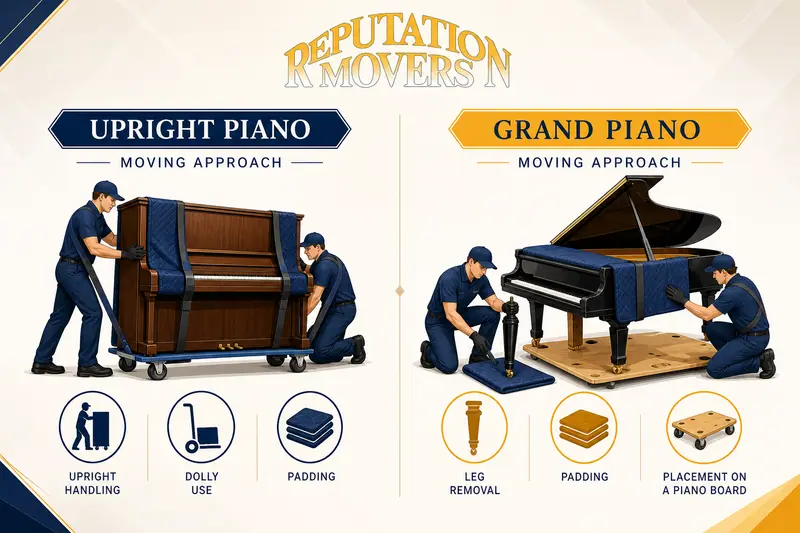
Upright pianos are tall, vertical instruments. Standard residential uprights often weigh 400 to 600 pounds, with much of the weight toward the back where the plate and strings sit. Because of their tall, narrow profile, they must be controlled carefully through doorways, hallways, and turns.
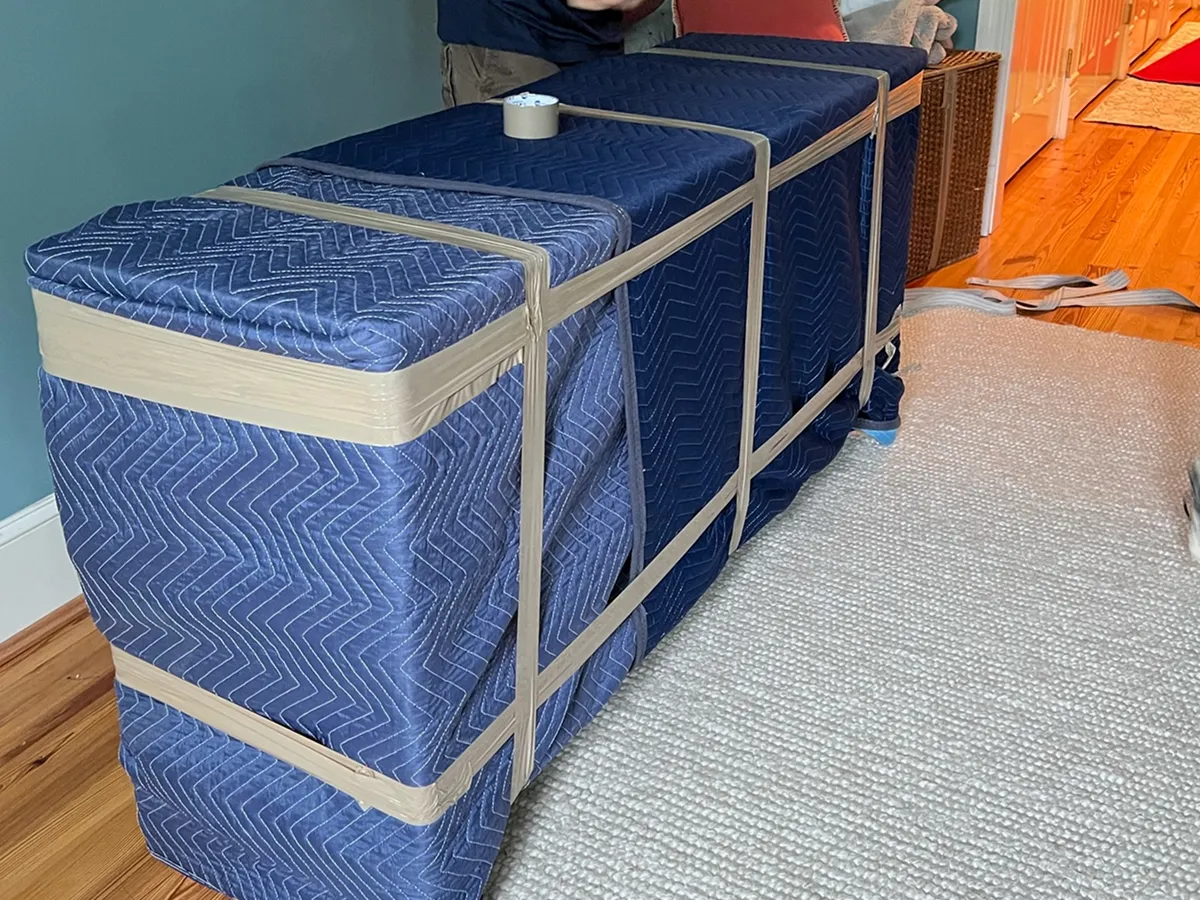
Professional crews generally keep upright pianos upright. The normal strategy is to close and secure the key cover, wrap the case in moving blankets, and lift only enough to place a properly rated four-wheel piano dolly under the center of gravity. The piano is then strapped to the dolly so it cannot tip during turns.
Grand and baby grand pianos require a different process. Their weight sits horizontally across a larger footprint, supported by legs and a pedal lyre assembly. Because those legs are not meant to carry the instrument during a full moving route, professionals usually remove certain parts before moving the piano body.
Common preparation for a grand piano includes removing the lid, music rack, key cover, pedal lyre, and legs in a controlled sequence. The body is then wrapped and tipped onto its side on a padded piano board, also called a skid board. PODS explains grand piano preparation as a process that includes removing components and carefully protecting the instrument before transport.
Why grand pianos usually need more people and planning
Moving a grand onto a board requires precise coordination. Some guides recommend at least five people for tipping the body safely onto the skid, because once legs are removed, the piano must be supported at every stage. A sudden drop can damage the instrument, floor, or both.
Once secured to the board, a grand piano can be rolled like a large, strapped load. However, stairs are a major danger point, especially for grands on boards. This is one of the clearest situations where professional planning and specialized equipment matter.
In practice, the question is not simply, “How do we move a piano?” It is, “What kind of piano is it, where is the weight, what must be removed, what route is available, and what protection is needed at each step?”
Professional Piano Moving Equipment Is Built for Weight, Control, and Protection
Piano moving equipment is different from general household moving equipment. A standard furniture dolly or small hand truck may work for boxes or lighter furniture, but pianos create loads that can overwhelm improvised tools. If equipment is not rated for the weight or shape of the instrument, it can fail, tip, or damage the home.
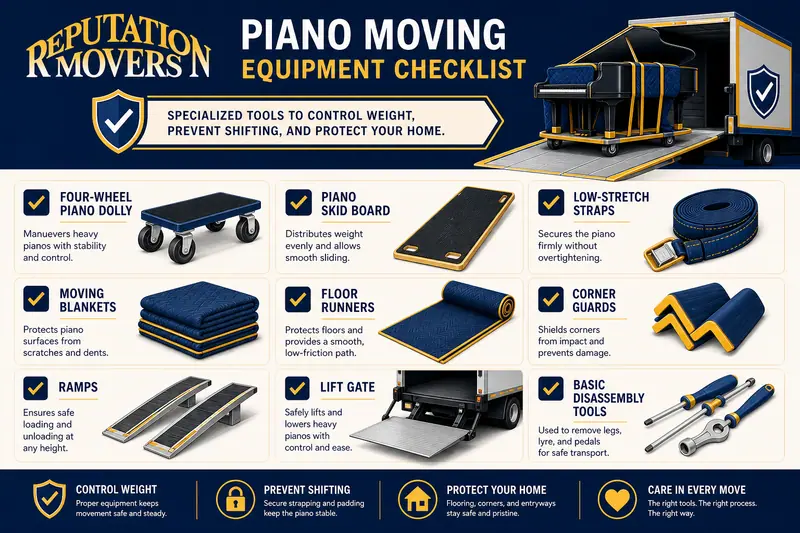
For upright pianos, professionals use a heavy-duty four-wheel piano dolly with rubber or non-marring casters. This spreads the weight over multiple points and helps protect floors while allowing the piano to roll under control. Many piano dollies have low platforms to keep the center of gravity closer to the ground.
Grand pianos require a piano board. This padded, reinforced board supports the piano body after the legs and pedal assembly are removed. Industrial-grade straps hold the instrument to the board, often in a crisscross pattern, so it does not shift during turns or loading.
The equipment list matters because each item solves a specific problem. Dollies distribute weight. Straps prevent lateral movement. Padding protects the finish. Ramps and lift gates reduce the need to lift full weight by hand. Stair-rated equipment helps manage elevation changes that would be unsafe with a basic dolly.
When a move involves packing, storage, furniture assembly, or complex home setup along with a piano, we plan those details as part of the larger relocation so the instrument and the home are handled with the right sequence and protection.
Four-wheel piano dollies: Used for upright pianos to distribute weight and allow controlled rolling with non-marring wheels.
Piano skid boards: Used for baby grand and grand pianos after controlled disassembly and padding.
Low-stretch straps: Used to secure uprights to dollies and grands to boards so the piano does not shift.
Heavy moving blankets and pads: Wrapped around the piano to protect the finish, corners, and trim.
Floor runners, mats, and plywood sheets: Used to protect flooring and distribute concentrated loads.
Doorway pads and corner guards: Placed at tight contact points to reduce scratches, dents, and chipped trim.
Ramps, lift gates, and stair-rated equipment: Used when elevation changes make lifting unsafe or impractical.
Basic disassembly tools: Used for grand piano lids, legs, music racks, and pedal assemblies.
U-Haul’s piano moving guidance also emphasizes using proper tools, padding, and coordinated help rather than treating a piano like ordinary furniture.
Stairs, Apartments, Townhomes, and Tight Spaces Increase Piano Moving Risk
Many piano moves become difficult because of the building, not just the piano. Apartments, townhomes, older houses, split-level layouts, and multi-story homes can all create access problems. A short entry stair, tight landing, narrow hallway, or shared corridor can change the entire moving plan.
Stairs are one of the highest-risk parts of any piano move. Going up or down requires controlling vertical and horizontal force at the same time. If the piano tilts too far or a mover loses footing, the instrument can slide, swing, or pin someone against a wall. The same incident can damage stair treads, risers, balusters, drywall, and the piano itself.
Even a small set of entry steps deserves serious attention. A piano’s height and weight change the angle quickly as it transitions from one level to another. The crew must maintain balance, keep the center of gravity controlled, and communicate clearly through every lift and pause.
Apartment and townhome moves add difficulty. Shared corridors may be narrow. Landings may not allow a clean turn. Elevators may be too small or may restrict heavy loads. Lobby floors, marble, engineered wood, and finished hallways can be damaged if the wrong wheels or no floor protection are used.
Tight doorways and older layouts are also challenging. Some moves require removing doors or temporarily detaching handrails to create enough clearance. Corners may bring the piano close to drywall, glass panels, trim, or railings. Without measured planning, a piano can get stuck mid-route, increasing risk as fatigue sets in.
A safe route is measured before the piano moves
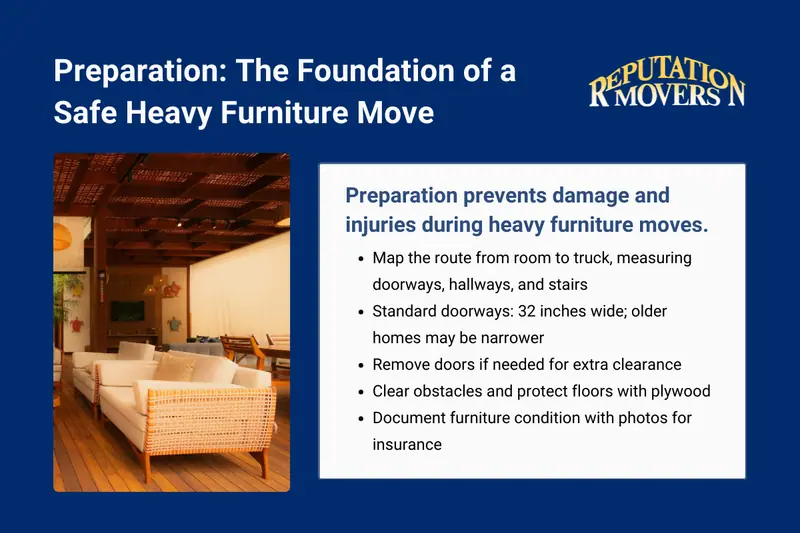
Professional planning includes measuring doorways, stairwells, turns, and landings before the move begins. Crews look at tread depth, riser height, turn radius, railing placement, and the available room for movers to stand safely. The goal is to choose a route that preserves control instead of forcing the piano through a space that cannot safely fit it.
For complex homes, the route may include intermediate staging points, added floor protection, ramps, or building coordination. In multi-unit housing, that can also mean communicating with property managers about elevators, lobby access, and shared-area protection.
Floors, Stairs, Walls, and Doorways Need Layered Protection Before the Piano Moves
Protecting the home is a separate task from protecting the piano. A piano can damage hardwood, crack tile, deform carpet, scrape trim, or punch drywall if the route is not prepared. Because the instrument is so heavy, even a brief uncontrolled movement can leave visible damage.
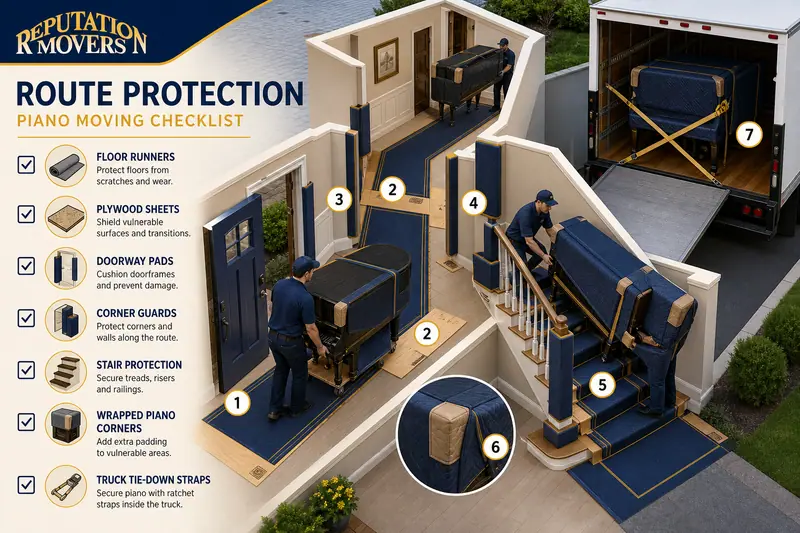
The first step is route mapping. Movers clear the pathway, measure tight points, and identify surfaces that need coverage. Hardwood can scratch or dent. Tile can crack under concentrated point loads. Carpet can compress, stretch, or tear if a piano is dragged. Stair edges can be damaged by direct pressure.
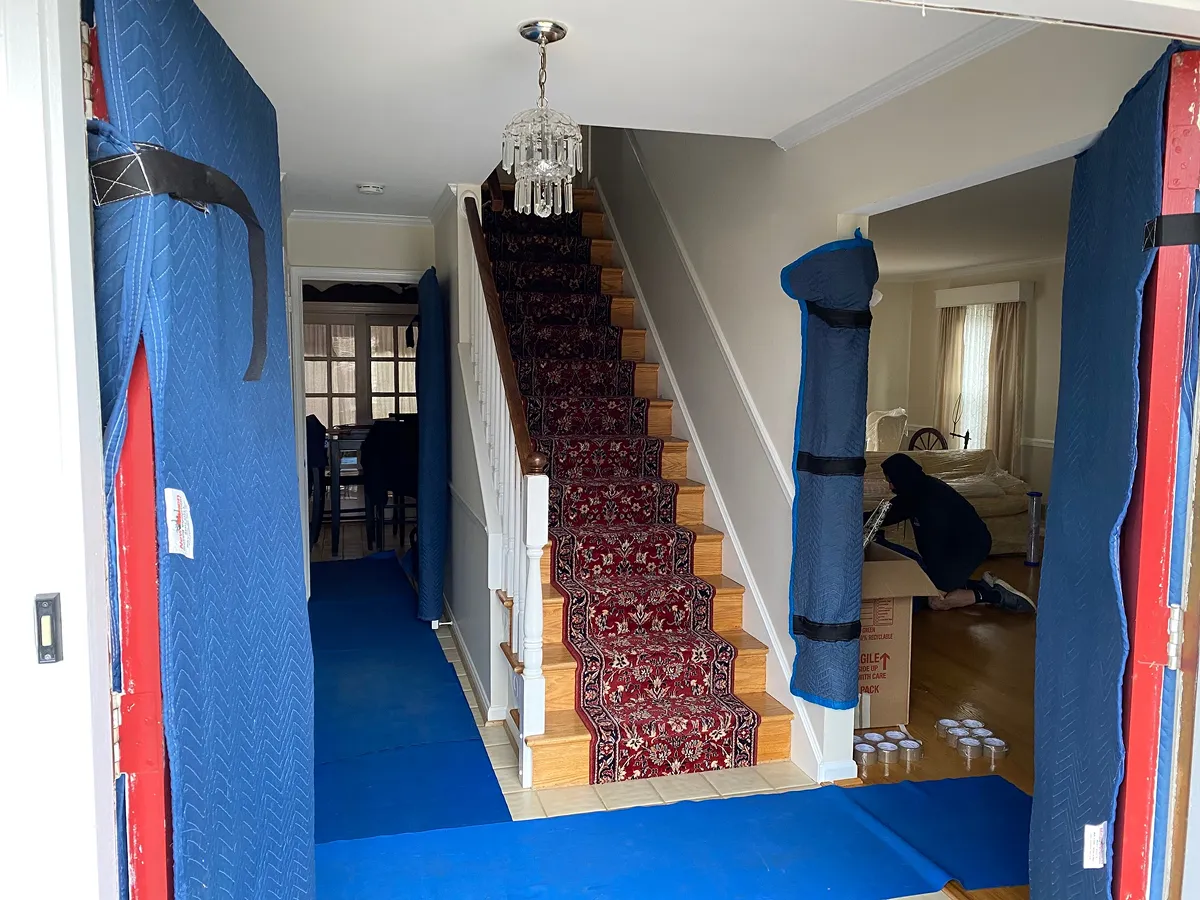
Floor protection often includes runners, mats, or plywood sheets. Plywood can help distribute weight over a broader area in delicate sections. Non-marring dolly wheels reduce marks, but they do not replace protective coverings in vulnerable areas.
Walls, doorframes, corners, railings, and bannisters also need attention. Crews use heavy furniture pads on the piano, then add padding or guards to contact points along the route. During turns, a spotter may focus only on keeping the piano away from trim, plaster, glass, or railings.
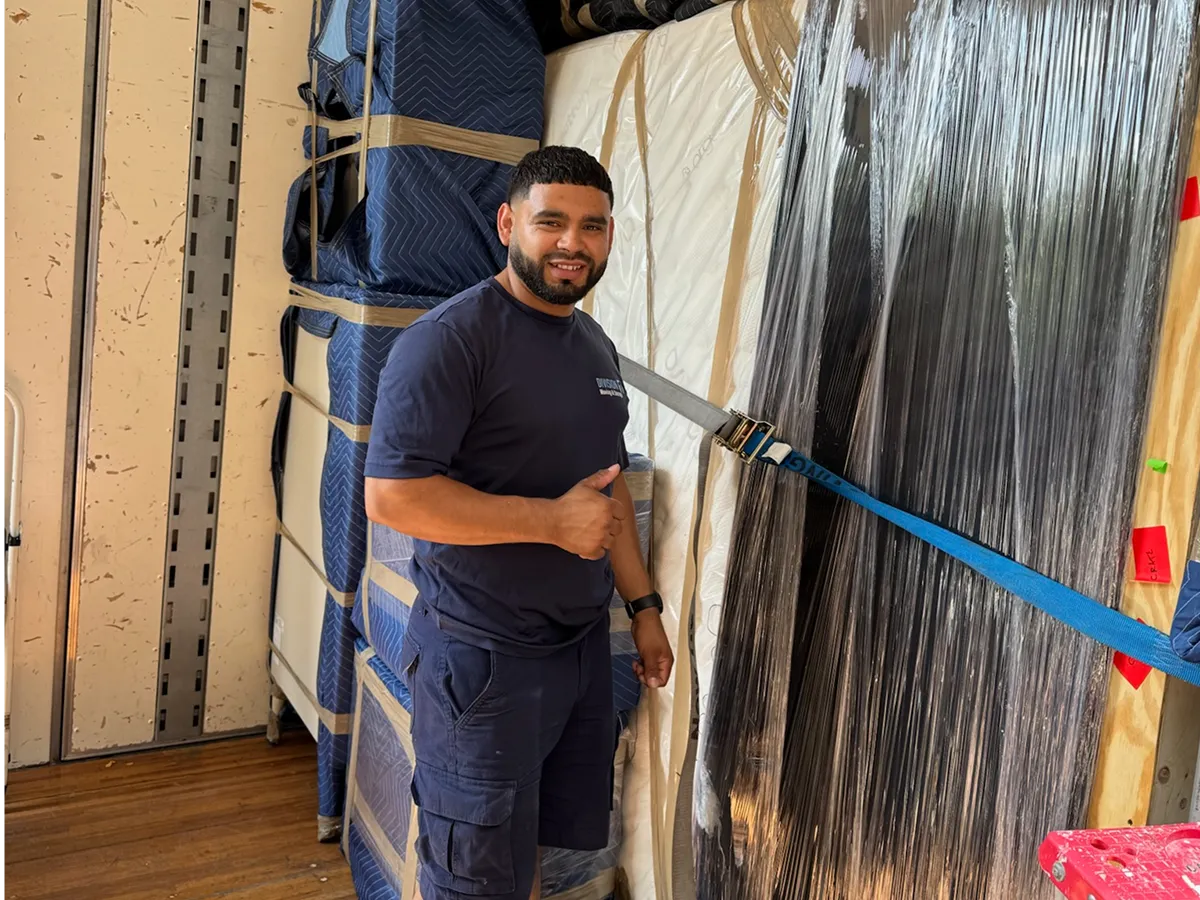
Inside a truck or container, the piano must be secured so it cannot shift. A piano that is carefully moved through the house can still be damaged in transit if it is not strapped properly. The same is true for nearby furniture, walls, or truck surfaces.
The most common DIY mistakes come from skipping these layers of preparation. Before deciding to move a piano without specialists, homeowners should understand the problems that most often lead to accidents.
Using under-rated equipment: Standard furniture dollies, small hand trucks, or improvised sliders may buckle, tip, or fail under piano weight.
Dragging the piano on its casters: Many piano casters are not designed for long-distance rolling and can damage floors or subflooring.
Laying an upright on its side or back: This can stress internal components and create mechanical or tuning problems.
Skipping route measurements: Tight turns, low clearances, and narrow doorways can trap the piano mid-move.
Ignoring stair risk: Stairs require team coordination, proper equipment, and a clear plan for each step and landing.
Taping directly to the finish: Tape residue or peeling can damage delicate exterior surfaces.
Losing grand piano hardware: Screws and fittings should be organized and labeled during disassembly.
U-Haul’s grand piano moving guide describes how padding, straps, and careful handling are used to protect the instrument during the process.
Hiring Piano Moving Specialists Is Smart When Access, Value, or Piano Type Raises the Stakes
Professional help is strongly recommended when a piano move involves stairs, tight access, a grand piano, or a valuable instrument. These are the situations where a small mistake can become expensive or dangerous quickly. Even for an upright piano, narrow hallways, multiple steps, or unusual entry conditions can make DIY moving unrealistic.

Baby grand and full grand pianos usually call for specialist help because they require controlled disassembly, a piano board, multiple trained people, and careful reassembly. Valuable or sentimental instruments also deserve a lower-risk approach, even if the route appears simple.
Homeowners considering a DIY move should assess four things honestly: available manpower, proper equipment, route difficulty, and risk tolerance. If any of those are weak, hiring professionals is the safer choice. Strength alone does not solve a piano move if the team lacks the correct dolly, straps, padding, or stair strategy.
Before booking, ask focused questions. The answers should tell you whether the company has a real piano moving process or is treating the piano as an ordinary heavy item. Forte Logistics notes piano moving risks that help explain why experience and equipment matter.
Do you regularly move upright, baby grand, and grand pianos?
What equipment will you use for my specific piano type?
How will you protect hardwood, tile, carpet, stairs, walls, and doorframes?
What is your plan for my staircase, landing, hallway, or elevator?
Will the piano be wrapped before it is moved through the home?
How will the piano be secured in the truck?
Can you provide a written estimate before the move?
What happens if the piano or property is damaged?
A reliable piano moving plan should be specific. It should address the piano type, crew size, equipment, route, protection materials, and any building requirements. Vague answers are a warning sign, especially when stairs or tight spaces are involved.
If you are planning a move in Alexandria, Northern Virginia, or the greater DMV area and need careful help with a piano as part of your relocation, Reputation Movers can help you plan the right approach. Get a Quote through our contact page or call us today at (703) 660-6683.