.webp)
.svg)
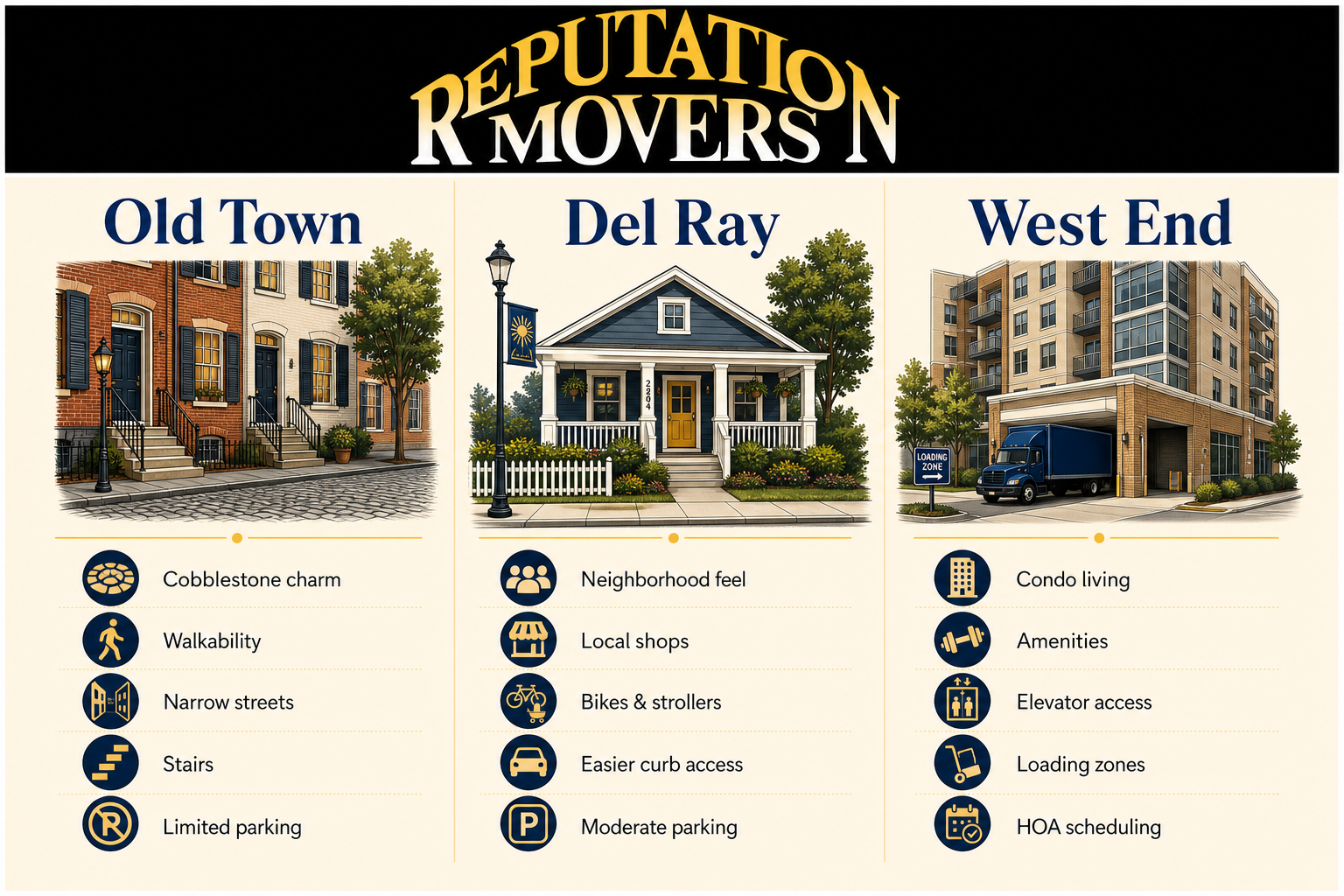
Alexandria is not one moving environment. Old Town, Del Ray, and the West End each have a different mix of housing, parking rules, street layouts, and building requirements. A move that feels simple in a West End high-rise can become much more complicated on a narrow Old Town block, while a Del Ray porch can create challenges for large furniture and loading.
As an independently owned moving and storage company based in Alexandria, Reputation Movers helps homeowners, renters, families, commuters, and downsizers throughout Northern Virginia and the greater DMV area plan around these local details every day.
If you have questions about an upcoming Alexandria move, call us today at (703) 660-6683.
Old Town Alexandria moves require careful planning for narrow streets and limited curb space
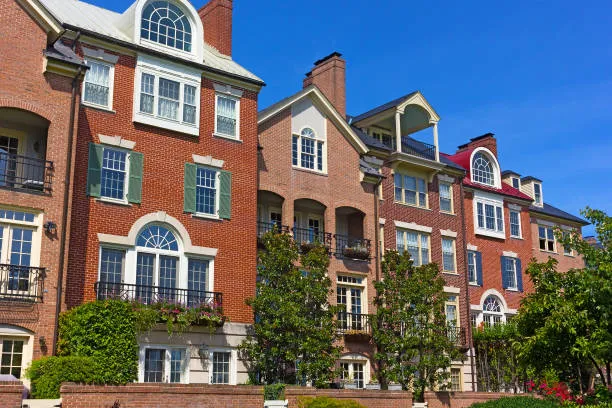
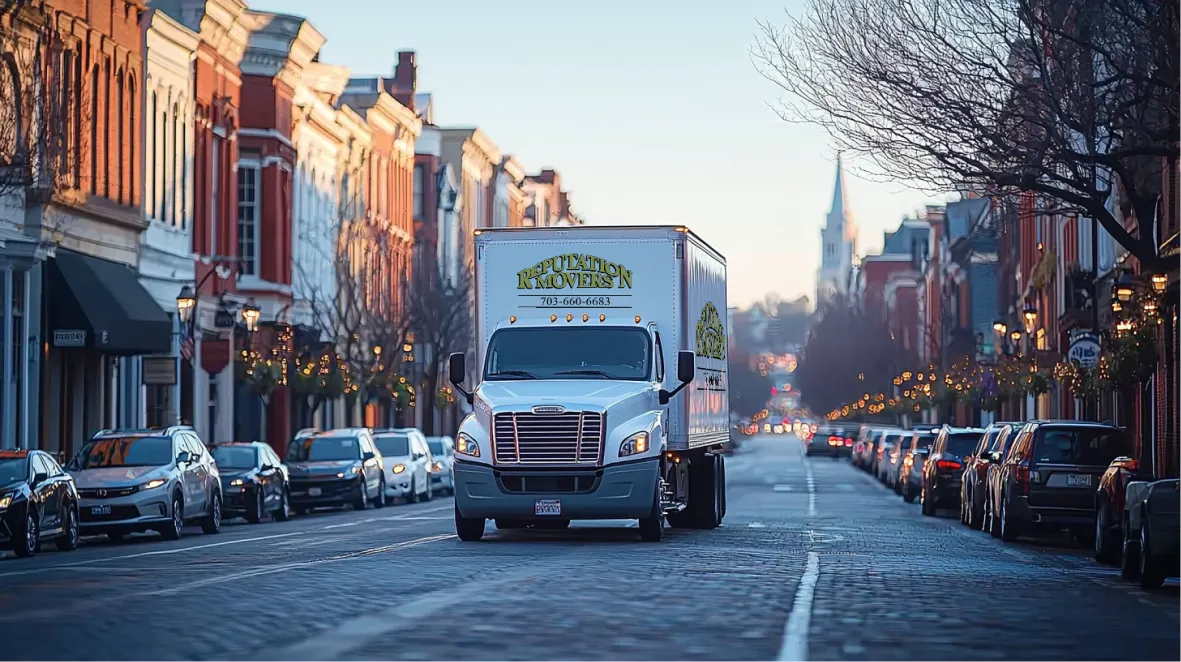
Old Town is Alexandria’s original waterfront district, with a street grid and many buildings dating from the late 18th and 19th centuries. That historic character is part of the appeal, but it also shapes moving day. Narrow streets, occasional cobblestone blocks, attached rowhouses, and homes built directly on the sidewalk leave little margin for error.

The housing stock in Old Town includes brick rowhomes, historic townhouses, small multi-unit buildings, and newer condo developments near the Potomac and King Street. Many homes do not have driveways, alleys, or front yards, so the curb is often the only practical place to stage a truck. In the busiest areas, extensive metered curb parking and multiple garages show how competitive public parking can be.
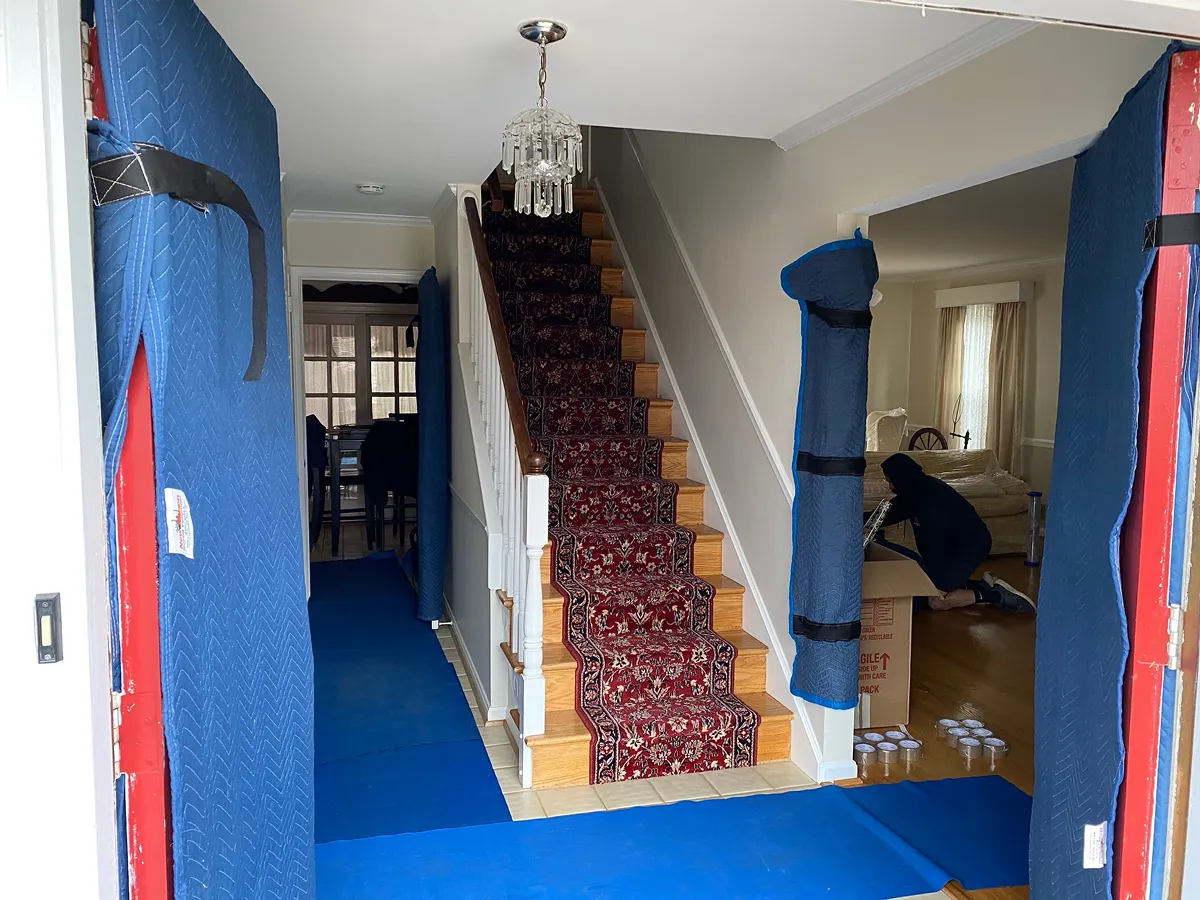
Inside Old Town homes, the biggest challenges are often vertical. Older interiors may have narrow staircases, multiple levels, tight landings, and less storage than newer construction. Large sofas, bed frames, dining tables, and appliances may need extra planning before they reach the truck.
Old Town moving risks often start before the first box is loaded
In Old Town, the wrong truck size or parking assumption can disrupt the move. A large truck may be difficult to maneuver safely on some residential blocks, especially near the denser parts of King, Prince, Cameron, Duke, and Union Streets. When curb space is scarce, a truck that cannot legally or practically stage near the home can add time, distance, and stress.
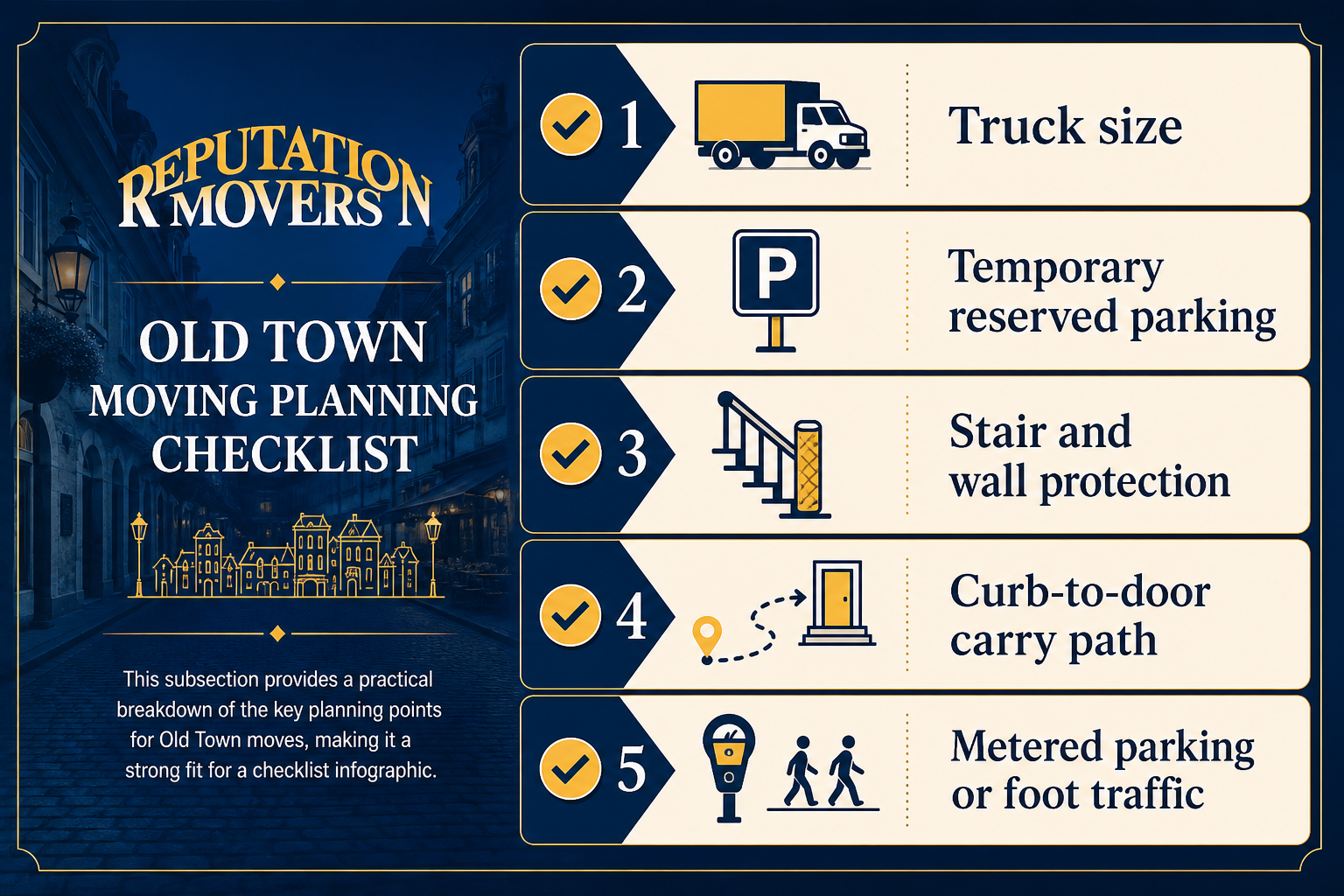
For Old Town moves, the most important planning points are usually:
Choosing a truck size that fits the block and turning conditions.
Confirming whether the move requires Temporary Reserved Parking.
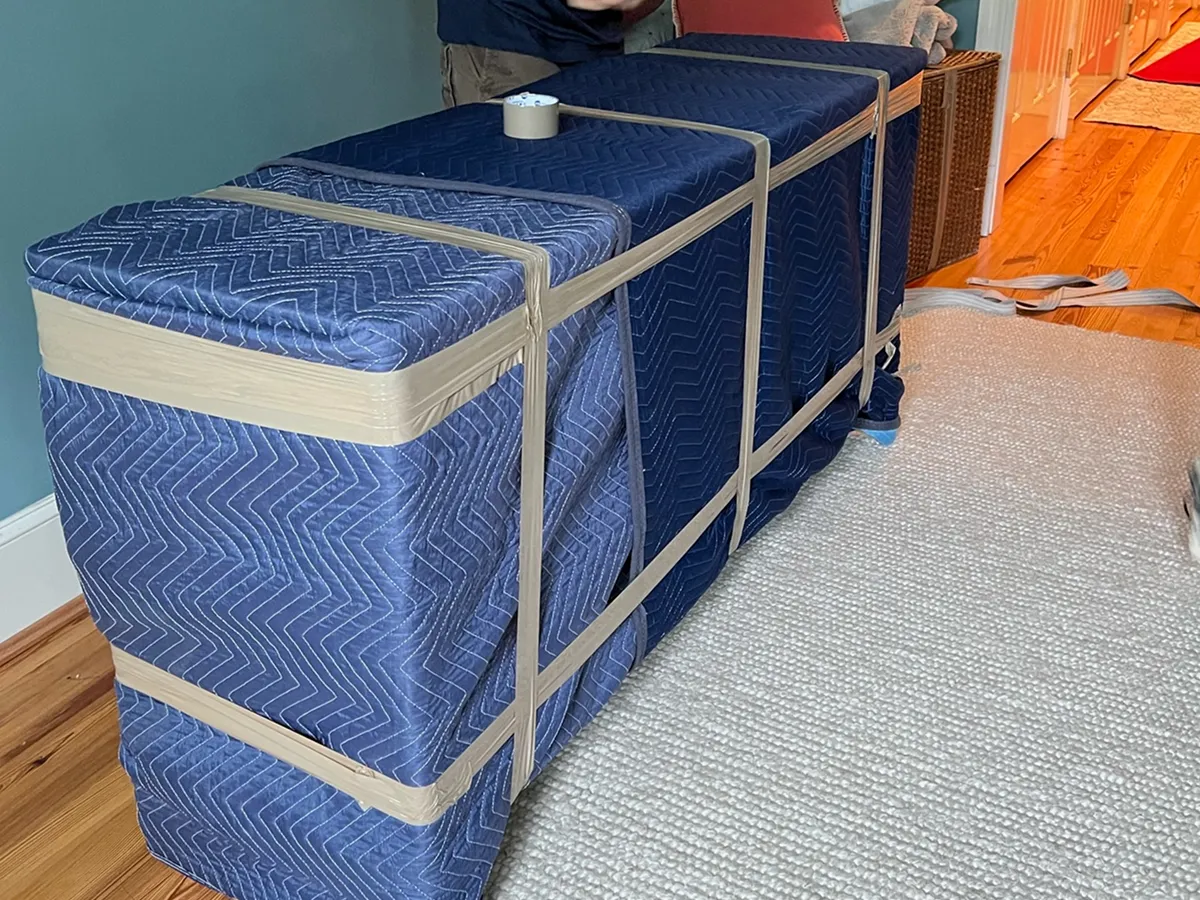
Protecting tight staircases, walls, railings, floors, and historic details.
Planning the carry path from curb to door before loading begins.
Accounting for metered parking, garages, tourists, workers, and foot traffic.
Old Town can be a rewarding place to live, but it rewards advance planning. The move is rarely just about distance from one address to another. It is about access, timing, stairs, truck placement, and respecting a historic residential setting.
Del Ray moves combine porch access, permit parking, and neighborhood foot traffic
Del Ray has a different rhythm from Old Town. Located north of Old Town along Mount Vernon Avenue, it is known for a “main street” feel, colorful storefronts, and bungalow-style houses with front porches. Tree-shaded streets, smaller apartment buildings, duplexes, single-family homes, and low-rise condo conversions make it appealing to families, renters, and downsizers who want a neighborhood feel.
Compared with Old Town, Del Ray lots are often slightly larger. Some homes have modest driveways or rear parking pads, which can make loading easier. Still, many households rely on street parking because of older garages, multi-car households, and permit-controlled blocks. The neighborhood may feel calmer, but moving logistics still need attention.
Porches are one of Del Ray’s defining features, and they are also a frequent moving challenge. Furniture may need to pass through porch railings, front steps, older doorways, narrow halls, and interior stairs. A route that looks easy from the curb may become difficult once a sectional, dresser, or table reaches the porch.
Del Ray moves depend on respecting the block as much as the house
Residential life in Del Ray extends toward the curb. People use sidewalks, porches, front steps, and driveways throughout the day. That makes move staging more visible to neighbors and pedestrians than in some apartment or condo communities.
Many Del Ray blocks are also affected by Residential Permit Parking districts. Under Alexandria’s Residential Parking Permit Program, non-resident parking is generally limited during posted periods, while residents use permits and visitors use short-term options. For moving day, posted signs and curb conditions matter as much as the address.
A smooth Del Ray move often comes down to practical decisions. Movers need to avoid blocking driveways, maintain sidewalk awareness, and keep the truck actively involved in loading or unloading. The work should also account for porch protection, doorway measurements, and how furniture will turn once it reaches the stairs.
Reputation Movers is especially familiar with the way Alexandria neighborhood moves depend on curb planning, stair protection, and careful pacing, particularly in older homes where one tight turn can determine the best plan for the job.
Del Ray may offer more flexibility than Old Town on some blocks, but it is not a place to improvise. Planning still protects the home, the schedule, and the surrounding neighborhood.
West End moves often revolve around elevators, loading docks, and building rules
The West End includes Alexandria’s western neighborhoods around the Mark Center, Landmark area, I-395, Duke Street, and Beauregard Street. Compared with Old Town and Del Ray, the West End has more mid-rise and high-rise apartment and condo buildings, garden-style complexes, planned communities, and late 20th-century housing patterns.
This changes the moving challenge. Instead of relying only on curb space, many West End moves involve parking garages, private driveways, loading docks, service elevators, and centralized lobbies. For renters, condo owners, and downsizers, those features can make moving easier, but only when building requirements are handled in advance.
Many larger buildings require residents to reserve a service elevator, book a move window, and provide proof of mover insurance before furniture and boxes can pass through common areas. Some property managers or HOAs also limit truck size, garage access, loading bay use, or entry routes. These rules can be as important as city parking regulations.
High-rise and condo moves require coordination before moving day
West End moves can feel orderly because buildings often have defined processes. That structure helps, but missing one step can create delays. If an elevator is not reserved, a loading dock is unavailable, or a certificate of insurance has not been accepted, the crew may not be allowed to begin on schedule.
Before a West End apartment or condo move, residents should confirm the building’s requirements in writing. The most common items to verify include:
The approved moving date and time window.
Service elevator reservation rules.
Loading dock or garage access instructions.
Truck height, length, or routing restrictions.
Proof of mover insurance requirements.
Rules about staging items in hallways, lobbies, or corridors.
Garden-style apartments and townhouse communities in the West End may feel more like Del Ray moves, with stairs, outdoor walkways, and curb loading. However, areas near major employment centers may also have daytime parking restrictions or heavier weekday traffic. Around the Mark Center, Alexandria has authorized daytime parking districts that can require a valid city decal or non-residential parking permit during restricted hours.
The West End usually gives movers more structured access than Old Town, but it asks for a different kind of preparation. The best plan aligns the crew, resident, building manager, elevator, loading area, and truck route before the first item is moved.
Alexandria parking permits and truck rules affect all three neighborhoods
Parking rules are one of the biggest differences between a simple Alexandria move and a stressful one. Old Town, Del Ray, Rosemont, and other central neighborhoods include Residential Parking Permit districts where posted time limits apply to non-residents. Commercial areas add their own limits, and residential streets add another layer for trucks.
Alexandria restricts commercial vehicles from parking on streets in residential districts except while actively loading, unloading, or performing services for a residence on that block. The city code allows this activity up to eight hours in a 24-hour period under Section 10-4-6. In commercial areas, commercial vehicle parking is generally limited to two hours unless loading or unloading.

Truck routing is also part of the plan. Alexandria maintains rules for designated truck routes and restrictions, including a standard maximum length of 40 feet for single-unit vehicles using city streets. The city’s truck restriction guidance helps define how larger vehicles should move through the city and where “No Through Truck” signage must be respected.
Temporary Reserved Parking can make curb staging legal and predictable
When a move requires curb space, Alexandria’s Temporary Reserved Parking system is often the practical solution. These permits reserve specific curb spaces for moving, loading and unloading, construction equipment, and other approved uses. They are especially important in Old Town and Del Ray, but they can also matter for West End garden apartments, townhouses, and curb-dependent buildings.
Applications can be submitted through APEX, the city’s online permitting system, or in person at the Construction Permits and Inspections Section. The request needs the exact address, side of the street, and meter numbers if metered spaces are involved. The city treats each reserved space as about 20 feet long, and moving-related reservations are capped at five spaces.

Timing is critical. Applications must be filed by 12 noon at least three full business days before the spaces are needed. Fees are currently $30 per day per non-metered space and $40 per meter per day for metered spaces through the city’s Temporary Reserved Parking process.
These details may sound administrative, but they directly affect moving day. A properly reserved curb can reduce long carries, avoid conflicts with parked cars, and help the crew keep the truck actively loading or unloading within city rules.
The right Alexandria neighborhood fit depends on lifestyle and moving logistics
Old Town, Del Ray, and the West End each serve different needs. The best fit depends on how someone lives day to day, how they commute, how much space they need, and how much moving complexity they are prepared to manage.
Families may be drawn to Old Town for historic charm and walkability, but tight streets, multi-story rowhouses, and limited parking can be challenging with strollers, multiple vehicles, and large furniture. Del Ray often appeals to families who want porches, yards, calmer streets, and a neighborhood atmosphere. West End families may prefer larger townhouse clusters, elevators, structured parking, or modern layouts.
Commuters also weigh the neighborhoods differently. Old Town offers proximity to King Street Metro, VRE, bus routes, and walkable services, though daily car use can be constrained by parking limits and congestion. Del Ray connects to routes such as Mount Vernon Avenue and Monroe Avenue, with bus options and access toward nearby Metro stations. The West End is strongly oriented toward road access through I-395, Route 7, and Duke Street, with bus-to-Metro patterns for transit users.
Renters and downsizers should plan for storage, stairs, and delivery timing
Renters often find more apartment and condo options in Del Ray and the West End than in the deepest parts of Old Town’s historic core. In the West End, high-rises and garden-style communities may offer elevators, structured parking, and professional management. In Del Ray, renters may be moving through porches, duplex entries, converted houses, or small apartment stairways.
Downsizers face another layer of planning. Moving from a larger home into an Old Town condo, a smaller Del Ray bungalow, or a West End elevator building may require sorting, staging, storage, or split deliveries. Older Alexandria homes may have limited closets, basements, or attic storage, while condo buildings may offer more predictable access but stricter scheduling.
For anyone comparing Alexandria VA neighborhoods, the moving question is not separate from the lifestyle question. A rowhouse, porch-front home, or elevator condo each comes with a different move plan. Understanding those differences early helps avoid surprises when the lease starts, the closing date approaches, or the moving truck arrives.
Plan your Alexandria move around the neighborhood, not just the address
A successful Alexandria move starts with the specific conditions around the home. In Old Town, that may mean reserved curb space, a smaller truck, and careful stair protection. In Del Ray, it may mean porch navigation, residential permit awareness, and keeping sidewalks and driveways clear. In the West End, it may mean elevator reservations, loading dock timing, and building paperwork.
The common thread is preparation. Alexandria’s neighborhoods are close together, but their moving logistics can be very different. Parking rules, truck routes, stair layouts, porch access, elevators, and storage needs all affect how the day should be planned.
If you are preparing for a local or long-distance move in Alexandria, our team can help you think through the details before moving day. Get a Quote through Reputation Movers at https://www.reputationmovers.com/contact-us or call us today at (703) 660-6683.




















.webp)


.webp)
.webp)
.webp)

.webp)
.webp)









.webp)
.webp)


.png)