.webp)
.svg)
Moving to a new home is a major project, but a clear packing timeline can turn a stressful experience into a manageable one. By breaking the process into weekly phases, you can avoid last-minute chaos, protect your belongings, and ensure nothing is overlooked. This guide, based on expert research, will help you create a realistic packing schedule tailored to your home size and needs.
In Alexandria, VA, Reputation Movers are your trusted specialists for local and long distance moves. If anything is unclear as you read this guide, feel free to contact us.
Why a Packing Timeline Is Essential
Many people underestimate the true scope of packing for a move. It is easy to overlook how much accumulates in closets, storage nooks, attics, basements, and even under beds. When you leave packing until the last minute, you risk running out of boxes, misplacing important items, or packing fragile belongings in a rush, which increases the chance of breakage. Last-minute packing also makes it more likely that you will forget to handle critical tasks like transferring utilities, updating your address, or thoroughly cleaning your home before you leave.
.webp)
By following a structured packing timeline, you can break the process into manageable steps and avoid feeling overwhelmed. For example, you might dedicate the first week to sorting and decluttering, the next to packing non-essentials, and the final days to boxing up daily necessities. This phased approach allows you to prioritize rarely used items, such as holiday decorations, archived paperwork, or out-of-season clothing, so you can pack them early and keep your living space functional until the last days. It also gives you time to gather the right packing materials, label boxes clearly, and create an inventory, which is especially important for families, long-distance moves, or homes with extensive storage and fragile items that need extra care.
Practical benefits of a packing timeline include:
- Reduced stress: Spreading out tasks prevents the panic of last-minute packing marathons.
- Better organization: You can label boxes by room and contents, making unpacking easier and faster.
- Protection for valuables: Fragile and high-value items can be packed with care, not rushed into boxes at the last minute.
- Time for logistics: You can schedule utility transfers, address changes, and cleaning without competing with packing for your attention.
- Flexibility: If unexpected issues arise, like work obligations or family emergencies, you have buffer time to adjust your schedule.
This approach is especially valuable for families juggling multiple schedules, long-distance moves that require more coordination, or homes with extensive storage and fragile items that need extra care.
How Far in Advance Should You Start Packing?
The right time to start packing depends on your home’s size, the volume of your belongings, and the complexity of your move. For a studio or one-bedroom apartment, three to four weeks is usually sufficient if you pack a little each day and stay organized. This allows you to sort through your things, donate or discard what you no longer need, and pack at a comfortable pace without disrupting your daily routine.
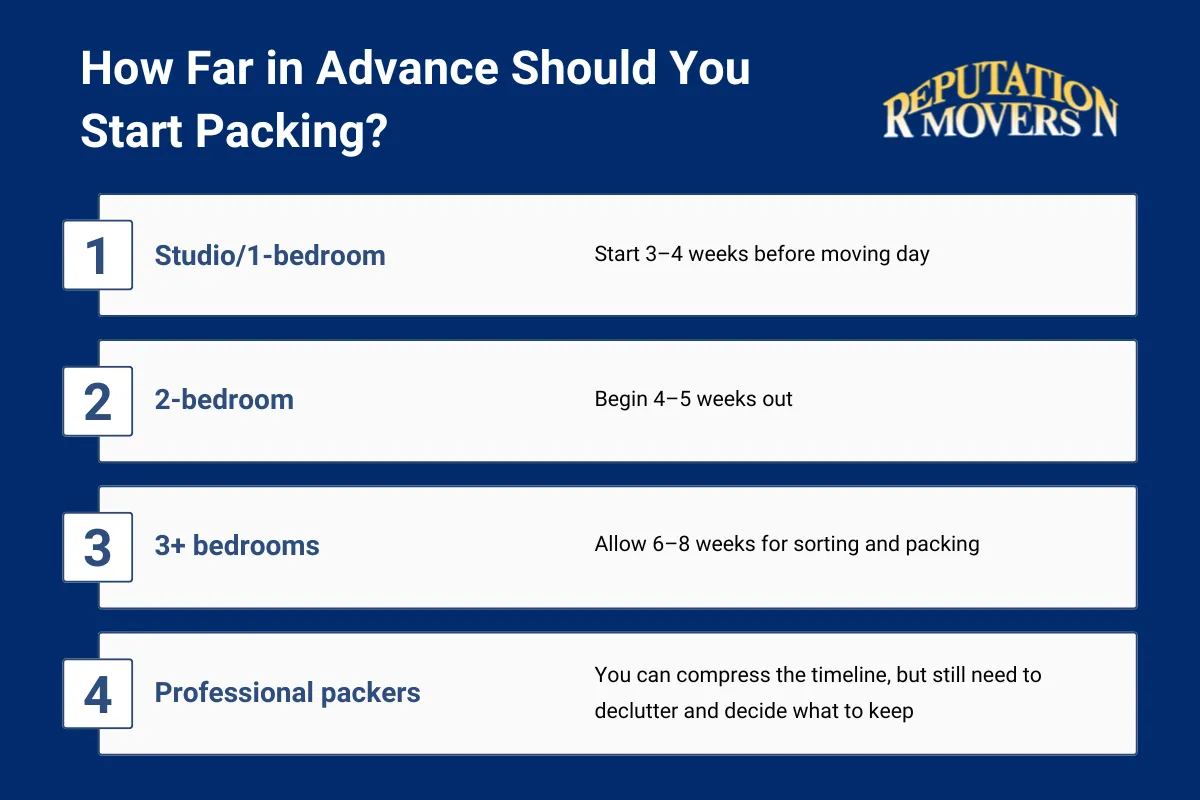
If you live in a two-bedroom home, it is wise to begin packing four to five weeks ahead. This extra time accounts for the increased volume of belongings and the likelihood of more storage spaces, such as closets, cabinets, or a small garage. For three-bedroom or larger homes, plan on six to eight weeks to sort, declutter, and pack thoroughly. Larger homes often have more rooms, more storage areas, and more family members, all of which add to the packing workload. If you have a lot of clutter, specialty items like artwork or musical instruments, or a busy schedule, start even earlier to avoid feeling rushed.
These are guidelines, not strict rules. If you are using professional packing help, you may be able to compress the timeline slightly, as experienced movers can pack efficiently and safely in less time. However, even with professional help, you will still need to sort, declutter, and make decisions about what to keep, donate, or discard before the packing team arrives. The key is to be realistic about your pace and build in extra time for unexpected delays, so you can approach moving day with confidence and peace of mind.
Practical tips for getting started:
- Begin by packing items you use least often, such as seasonal clothing, books, or decorative pieces.
- Set aside a few boxes for essentials you will need right up until moving day, like toiletries, a few dishes, and daily medications.
- Label each box with its contents and the room it belongs in at your new home.
- Keep a running inventory, either on paper or digitally, to track what you have packed and what remains.
- Schedule regular, short packing sessions, 30 to 60 minutes a day, to maintain momentum without burning out.
6–8 Weeks Before Moving Day: Planning and Decluttering
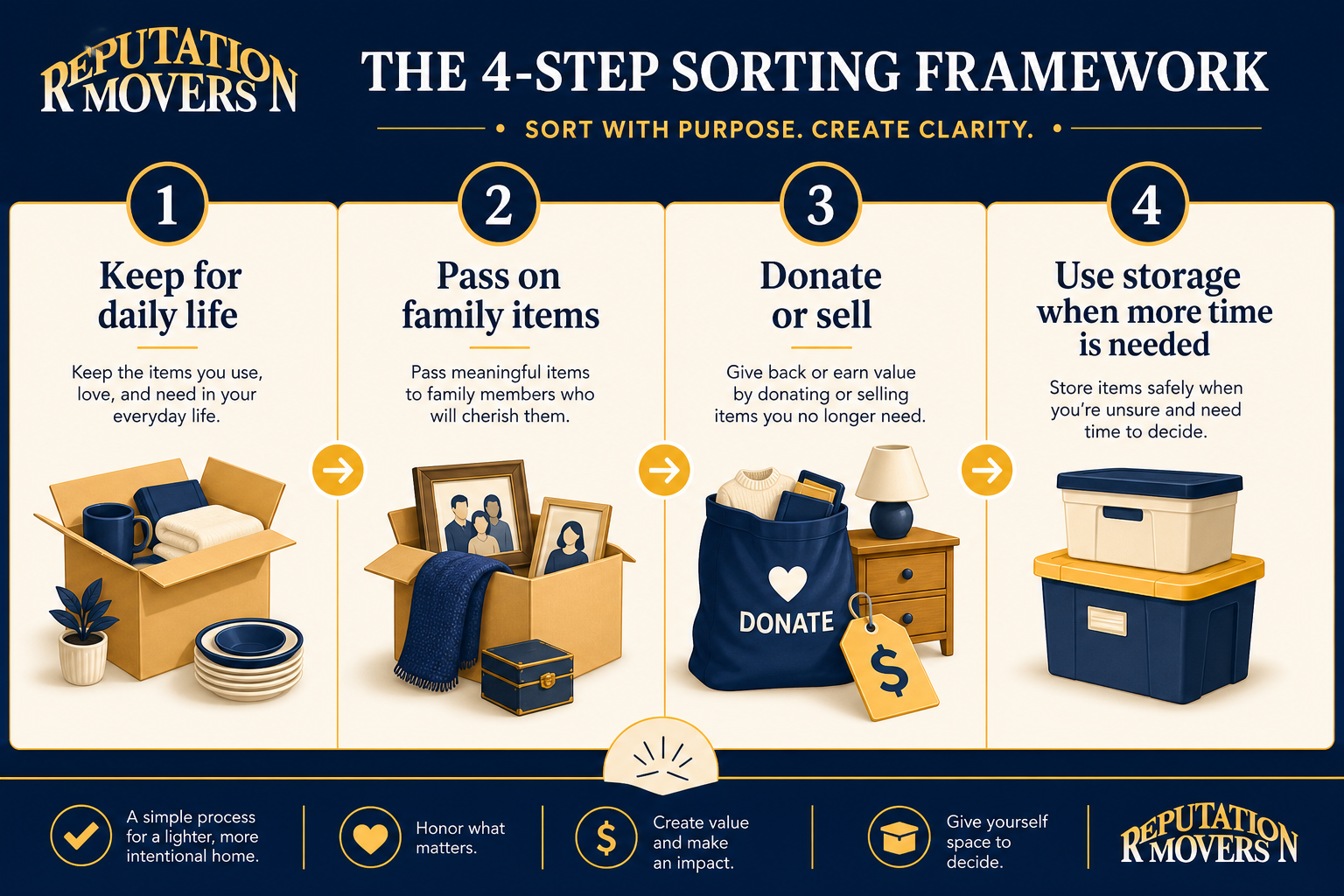
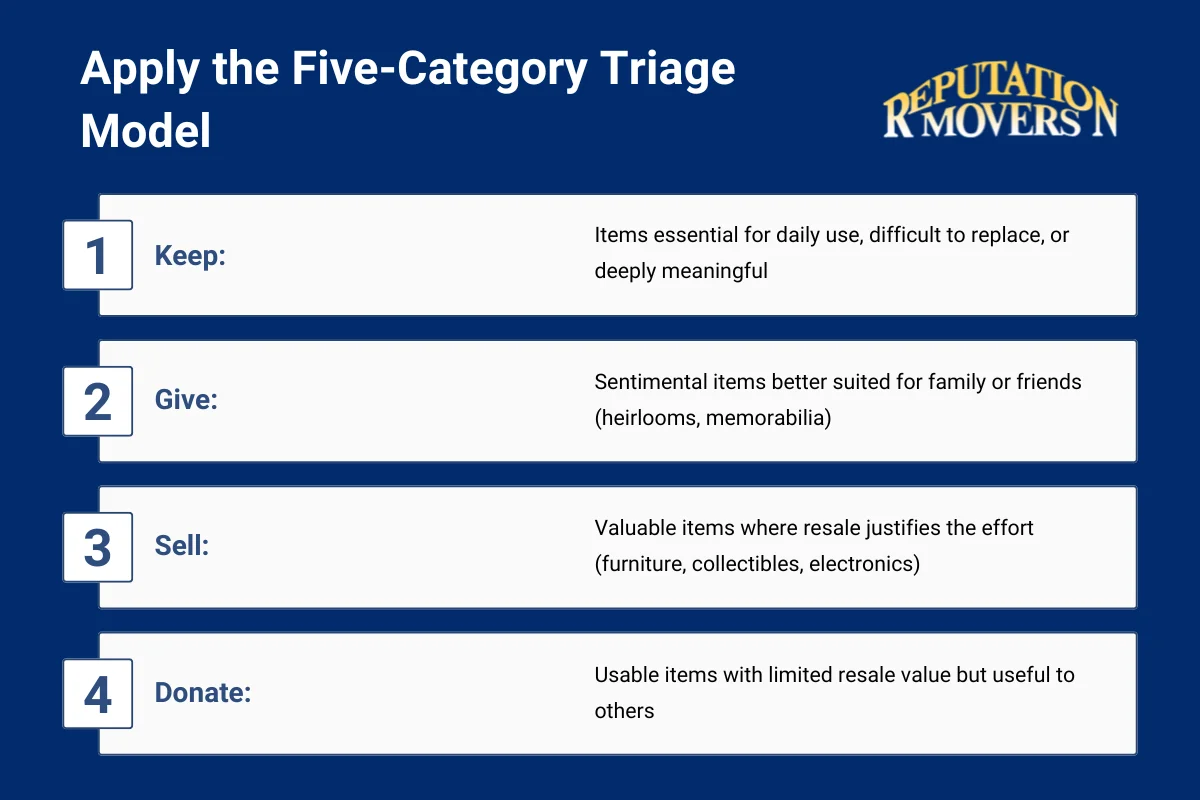
At this early stage, focus on preparation rather than boxing up your belongings. Begin by creating a master moving checklist and budget. Research and book your moving company or truck rental, and start an inventory of what you will move, donate, sell, or discard. Decluttering room by room during this window significantly reduces how much you eventually pack, since you can donate or sell items you do not want to pay to transport. This is also the ideal time to gather packing materials, boxes, tape, markers, packing paper, and padding, so you are not delaying packing later because of supply runs.
5–7 Weeks Before: Supplies and Early Packing
With your plan in place, begin gathering all essential packing supplies. This is also the time to start packing items you will not need before the move. Focus on rarely used areas such as the attic, basement, or long-term storage closets. Anything stored there is unlikely to be needed before the move, so packing these items early allows for careful wrapping and labeling, reducing the risk of damage and confusion later. Continue to declutter as you go, and label boxes with both contents and destination room.
4–6 Weeks Before: Room-by-Room Packing Plan
This is when packing becomes more intentional. Start with rooms and items you use least, such as guest bedrooms, formal dining rooms, or hobby spaces. Consolidate seasonal items, rarely used kitchen gadgets, collections, artwork, books, and extra linens. Assign specific rooms or categories to each week or day using a written or digital packing calendar. This keeps you on track and prevents procrastination. Continue to purge as you pack, donate or discard anything you do not want to move.
3–4 Weeks Before: Main Packing Phase
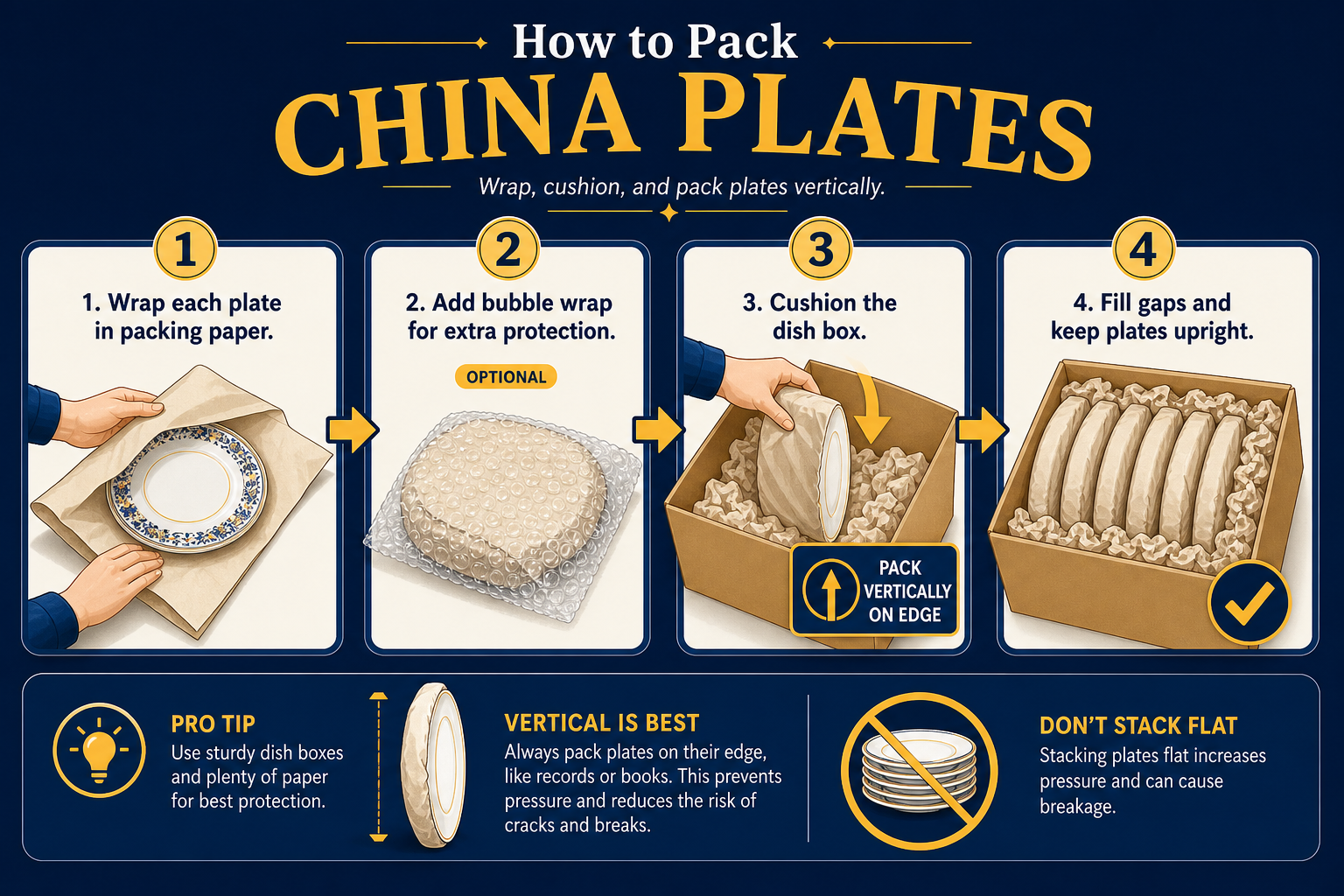
For most homes, this is when the bulk of packing happens. Focus on infrequently used belongings such as seasonal decor, fine china, off-season clothing, spare linens, and tools you will not need. Stack boxes in the rooms where they were packed for easy tracking. Label boxes on multiple sides with contents and destination room. By now, your packing calendar should guide your daily or weekly goals, helping you see progress and adjust as needed.
2 Weeks Before: Packing Most of the Household
At this point, you should pack most remaining items, while keeping out only what you need for daily life. Begin packing kitchenware, setting aside one plate, glass, and set of utensils per family member along with basic cookware. Pack extra bathroom supplies, non-essential clothing, and the bulk of toys, books, and decor. Identify and pack “Open Me First” and first-night boxes with essentials for your first day in the new home. Plan meals around what is left in your pantry and fridge, and begin using up or donating perishable food items.
1 Week Before: Essentials and Final Steps
By now, almost everything except daily essentials should be packed. Focus on packing your essentials box: toiletries, a few changes of clothes, medications, important documents, chargers, basic tools, and simple kitchen supplies. Clean each room as it is finished, confirm moving day logistics with your movers, and arrange childcare or pet care for moving day if needed. Transport essentials and valuables in your own vehicle for security and quick access. Verify with your moving company if there are any items they will not transport, such as hazardous chemicals or open liquid containers.
Moving Day: Last-Minute Items and Supervision
On moving day, everything except the few items you used overnight should already be boxed. Pack bedding, toiletries, and any last-minute kitchen items. Load essentials and valuables into your personal vehicle. Walk through each room to ensure nothing is left behind. Supervise the loading process, ensuring boxes are placed in the correct order and location in the truck. Clear labeling and room-by-room organization make unloading at your new home much easier.
Don’t Forget Administrative Tasks
Packing is just one part of a successful move, administrative tasks are equally important and should be scheduled alongside your packing timeline. About six weeks before moving day, start by making a list of all the organizations, companies, and individuals who need to know your new address. This includes banks, credit card companies, insurance providers, healthcare professionals, schools, and any subscription services you use. Notify your employer and update your address with any professional licensing boards if applicable.
.webp)
Next, contact your utility providers to schedule the transfer or setup of essential services such as electricity, gas, water, internet, and trash collection. It’s wise to overlap services by a day or two at both your old and new addresses to avoid any gaps. If you have home security systems, lawn care, or pest control services, arrange for their transfer or cancellation as well. Don’t forget to update your address with online retailers, delivery services, and government agencies like the DMV or postal service.
Practical steps include:
- Setting calendar reminders for each administrative task so nothing is missed
- Creating a checklist of contacts and utilities to update, checking off each as you go
- Scheduling time off work for moving day and, if needed, the days before and after for packing and settling in
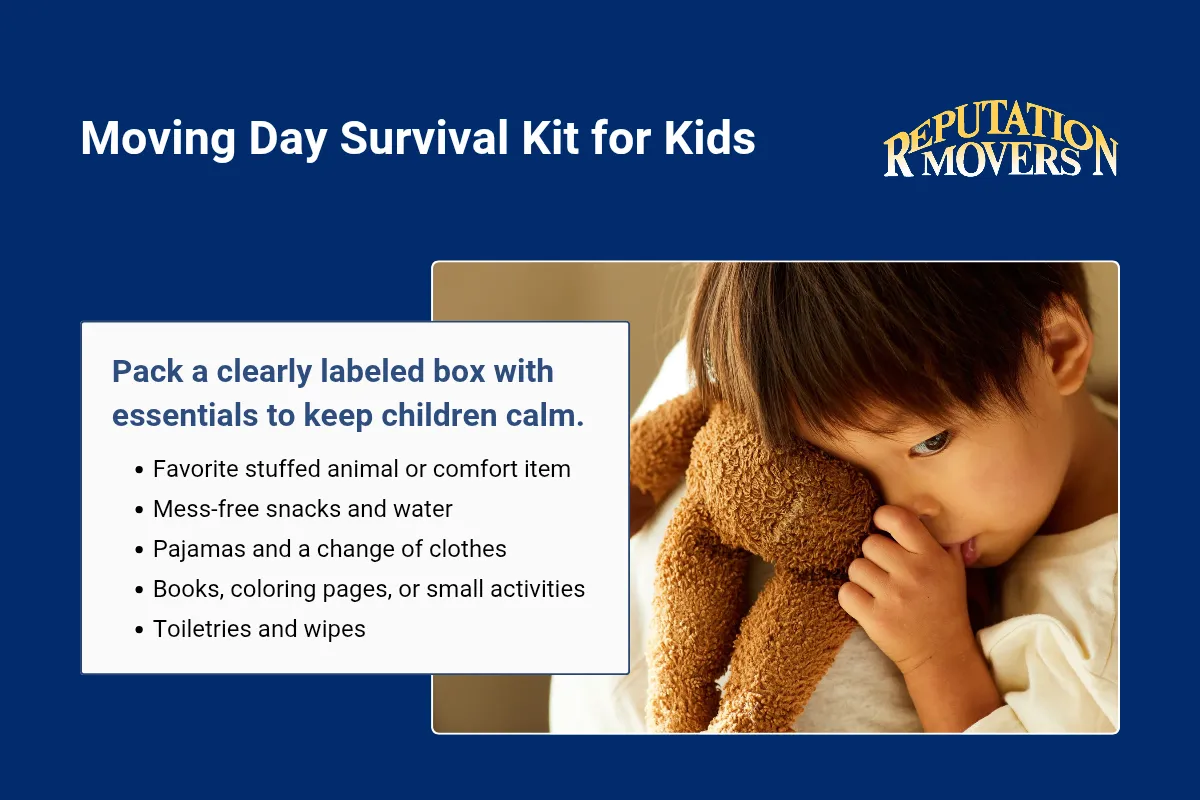
- Arranging childcare or pet care for moving day to keep the process smooth and stress-free
By adding these tasks to your packing calendar, you ensure that all critical details are handled on time, preventing last-minute surprises and service interruptions.
Room-by-Room Organization: The Key to Efficiency
Organizing your packing by room is one of the most effective ways to maintain order and momentum. Instead of scattering your efforts across the house, focus on completing one room at a time. This approach makes it easier to keep track of what’s packed, reduces the risk of leaving items behind, and ensures that boxes are logically grouped for both loading and unloading.
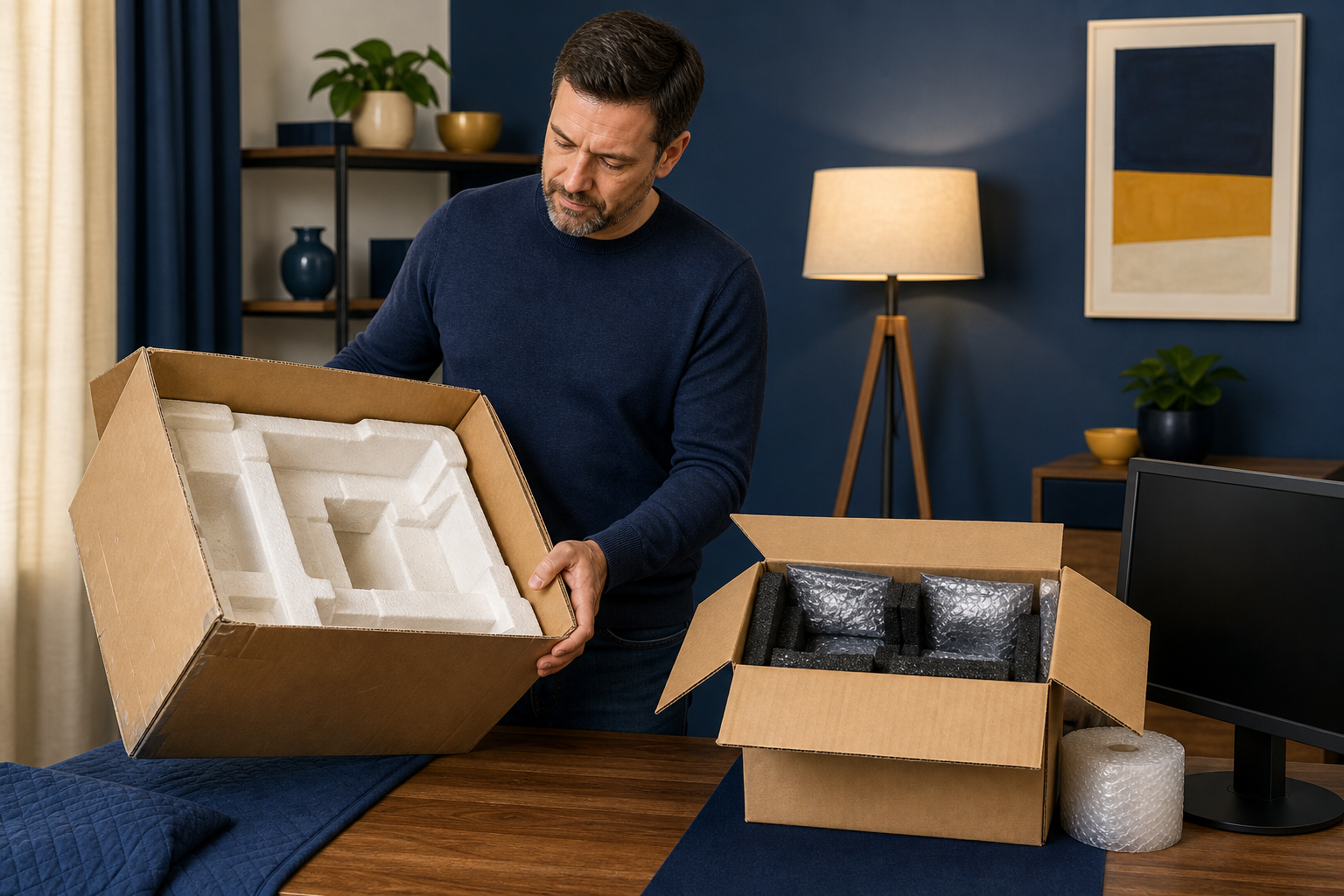
For complex spaces like kitchens, dedicate a specific day or two in the final 1–2 weeks before your move to pack by category. Start with items you use least, such as specialty bakeware, serving dishes, or holiday glassware. Then move on to pantry items, small appliances, and finally, everyday dishes and utensils, leaving out only what you’ll need for the last few days. Use dish towels or bubble wrap to protect fragile items, and clearly label each box with its contents and destination room.
.webp)
In bedrooms, begin by packing off-season clothing and spare linens. Next, pack shoes, accessories, and decorative items. Save your regular wardrobe and daily essentials for the last few days before moving. This method keeps your living space functional and minimizes disruption to your daily routine. For bathrooms, pack extra toiletries and towels early, but keep out enough for each family member until moving day.
For living rooms, offices, and storage areas, tackle books, decor, and electronics first. Disassemble furniture if needed, and keep hardware in labeled bags taped to the furniture pieces. By completing one room at a time, you’ll see tangible progress and make unpacking at your new home much more efficient.
Labeling and Inventory: Preventing Confusion and Loss
Proper labeling and inventory are crucial for a smooth move and easy unpacking. Label each box on at least two sides with the destination room and a brief description of its contents, such as “Kitchen – Pots and Pans” or “Master Bedroom – Winter Clothes.” For fragile items, add clear “FRAGILE” markings and arrows indicating which side should face up.
For more complex moves, especially those involving storage or long-distance transport, keep an itemized list that associates each box number with its contents. You can use a notebook, spreadsheet, or a moving app for this purpose. Number each box and record what’s inside, this not only helps you find items quickly when unpacking but also provides essential documentation for insurance claims if anything is lost or damaged during the move.
Practical labeling and inventory tips include:
- Using color-coded labels or tape for each room to make sorting easier at your new home
- Keeping a master inventory list in a folder or on your phone for quick reference
- Photographing valuable or fragile items before packing for insurance purposes
- Marking “Open First” boxes with essentials you’ll need immediately upon arrival
Taking the time to label and inventory as you go will save you hours of frustration later and ensure that your move is as organized and stress-free as possible.
Adapting the Timeline to Your Needs
No two moves are exactly alike. If you have a small studio, you may be able to compress the active packing period to two or three weeks, especially if you dedicate longer daily sessions. For larger homes, starting planning and light packing a full eight weeks out is almost always beneficial. Specialty items like large artwork or fragile collections require extra lead time for careful packing or professional help.
Sample 8-Week Packing Timeline
Here is a sample schedule you can adapt to your own needs:
8 weeks out: Plan, budget, and start decluttering.
6 weeks out: Gather supplies, notify contacts, continue decluttering.
4 weeks out: Begin packing rarely used rooms and items.
2–3 weeks out: Pack most of the home, focusing on non-essentials.
1 week out: Pack essentials, clean, and finalize logistics.
Moving day: Pack last-minute items, supervise loading, and do a final walkthrough.
Adjust this timeline based on your home size, inventory, and personal schedule.
Tips for Staying on Track
Consistency is key. Many moving experts recommend shorter, regular packing sessions, such as 30 to 90 minutes daily, rather than sporadic all-day marathons. Anchor these sessions to your daily routine, like packing after dinner or dedicating weekend mornings to more demanding rooms. Build flexibility into your calendar with buffer days and catch-up slots to handle interruptions without falling behind.
.webp)
Let Reputation Movers Make Your Move Easier
Moving does not have to be stressful. With a clear packing timeline and the right support, you can transition smoothly to your new home. Reputation Movers offers expert local and long distance moving services in Alexandria, VA, with a focus on careful handling, efficient scheduling, and personalized attention. Whether you need help with packing, logistics, or the entire move, our team is here to guide you every step of the way. For a seamless, stress-free move, contact Reputation Movers today.



















.webp)

.webp)
.webp)
.webp)

.webp)
.webp)










.webp)

.webp)


.png)