.webp)
.svg)
Downsizing your home is a major life transition, one that comes with both emotional and practical challenges. Whether you’re moving to a smaller space in Alexandria, preparing for retirement, or simply seeking a simpler lifestyle, the process can feel overwhelming. The key to a successful downsizing? A clear, actionable checklist and a proven process to help you sort, organize, and move only what truly matters to your next chapter.
At Reputation Movers, we’ve helped hundreds of Northern Virginia homeowners navigate the complexities of downsizing. We know that every item, room, and decision counts. That’s why we’ve created the ultimate downsizing home checklist, packed with expert advice, step-by-step strategies, and practical tips to make your move smoother from start to finish.
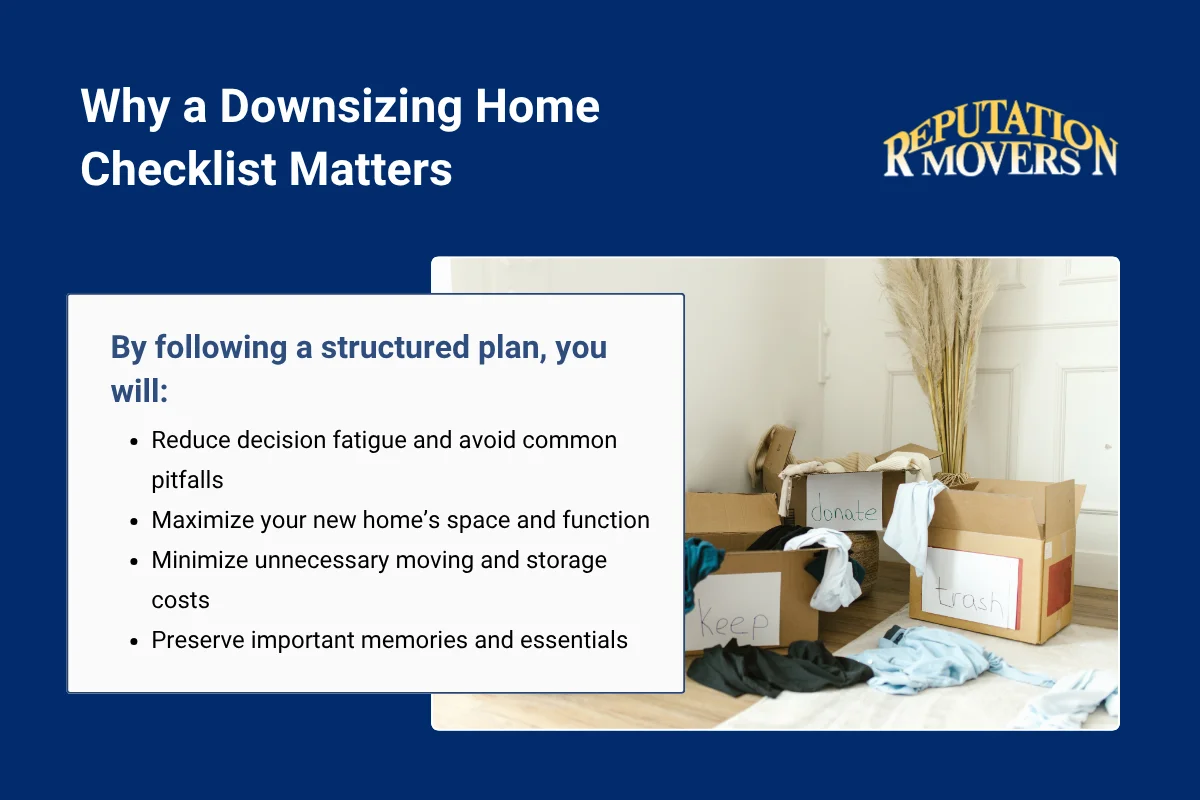
Why a Downsizing Home Checklist Matters
Downsizing isn’t just about packing fewer boxes. It’s a deliberate process of aligning your belongings with your new space, lifestyle, and priorities. A checklist brings order to what can otherwise be an emotionally charged and chaotic project. By following a structured plan, you’ll:
Reduce decision fatigue and avoid common pitfalls
Maximize your new home’s space and function
Minimize unnecessary moving and storage costs
Preserve important memories and essentials
Arrive in your new space feeling organized and in control
Let’s walk through the essential steps and best practices for building your own downsizing home checklist, tailored for Alexandria, Arlington, Fairfax, and the greater DMV area.
Step 1: Set Clear Goals and a Realistic Timeline
Start your downsizing journey by clarifying your objectives and timing. Ask yourself:
What is the size and layout of your new home?
When do you need to be fully moved out?
Are there any specific priorities, such as accessibility or proximity to family?
Ideally, begin planning at least 2, 3 months before your move date. This allows time for sorting, selling, donating, and logistics. Create a calendar with weekly milestones, such as completing one room per week or scheduling pick-ups for donations and bulky items.
Step 2: Create a Room-by-Room Inventory
Before you start packing, walk through each room and make a detailed inventory. This isn’t just a list of what you own, but an opportunity to assess what will serve your life in the new space.
For each item, consider:
Do you use it regularly, seasonally, or not at all?
Does it have a defined place in your new home?
Is it worth the cost and effort to move or store?
Does it have true sentimental or functional value?
Write down large furniture, appliances, collections, and storage items. Taking photos can help you visualize what will (and won’t) fit in your new environment.
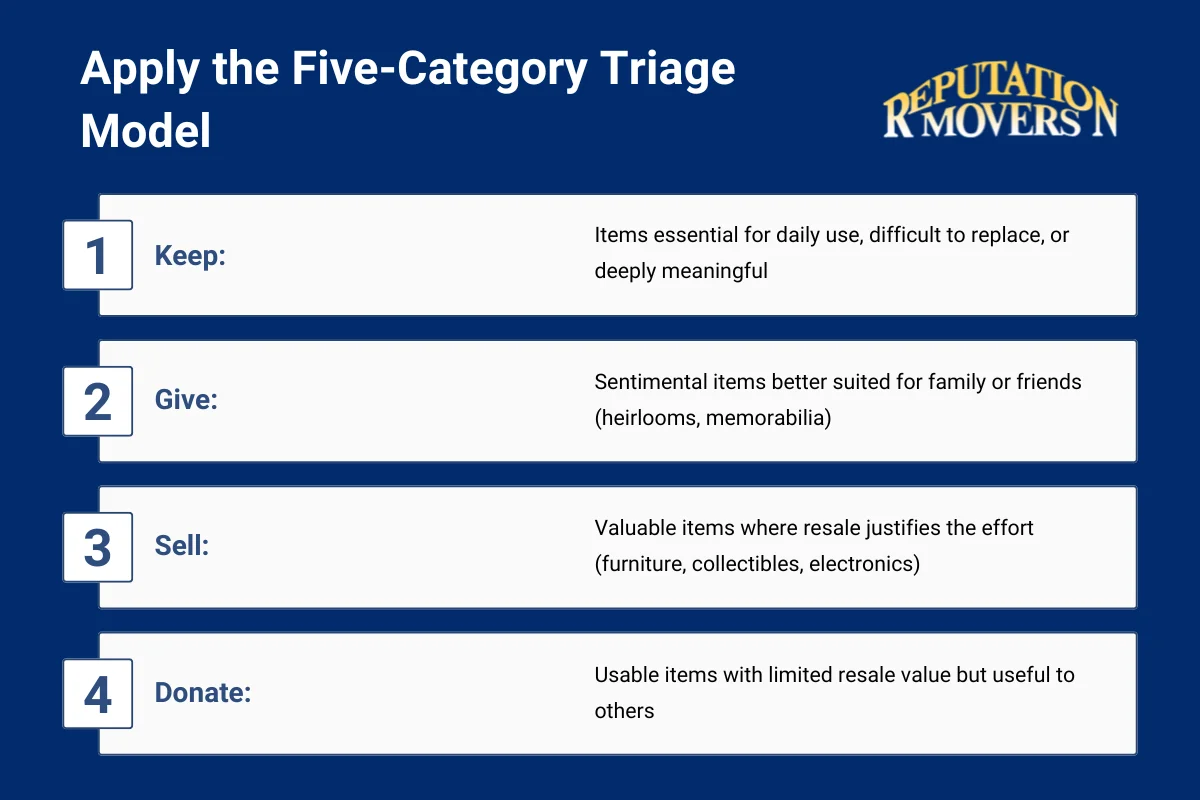
Step 3: Apply the Five-Category Triage Model
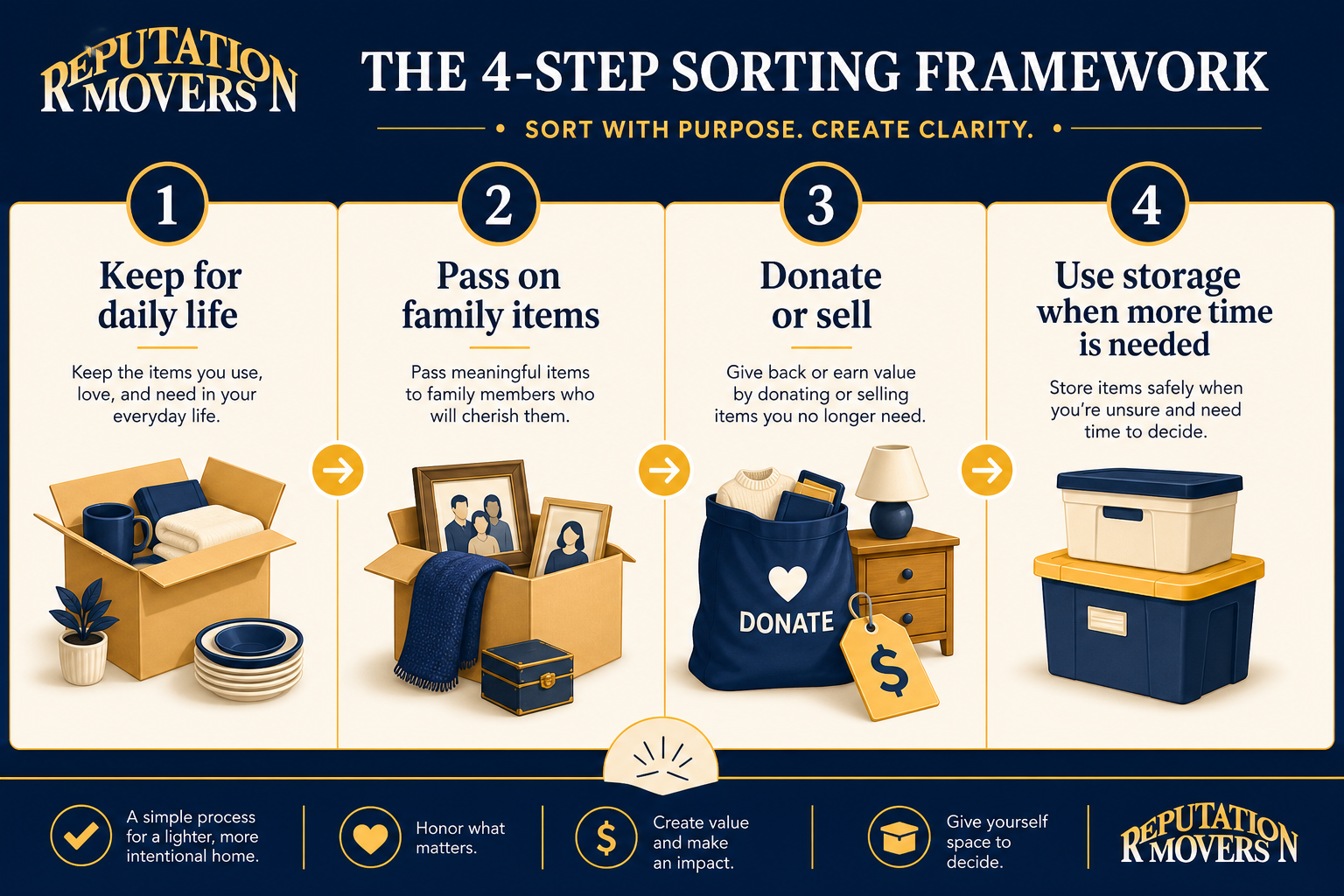
The most effective downsizing systems use a five-way classification for every item you encounter. As you sort, label boxes or bins with these categories:
Keep: Items essential for daily use, difficult to replace, or deeply meaningful
Give: Sentimental items better suited for family or friends (heirlooms, memorabilia)
Sell: Valuable items where resale justifies the effort (furniture, collectibles, electronics)
Donate: Usable items with limited resale value but useful to others
Discard/Recycle: Broken, outdated, or low-value items with no reuse potential
Physically sort items into these bins as you go to keep progress visible and momentum high. If you must use a “Decide Later” category, set a strict deadline to revisit those choices.
Step 4: Use Core Decision Rules to Guide the Process
To avoid getting stuck, rely on a small set of decision-making questions for each possession:
Have I used this in the last 12 months?
Would I buy this again if it disappeared tomorrow?
Can I replace it for under $20 in less than 20 minutes?
Does it have a clear place or function in the new home?
Does it hold unique emotional value I can’t preserve another way?
If your answer is “no” to most of these, it’s usually time to let go. This approach minimizes regret and ensures you’re only bringing what truly matters to your new space. Use a timer or recruit a friend to help keep you on track when making tough decisions.
Step 5: Map Out Your New Space First
One of the biggest mistakes people make is packing before understanding the physical constraints of their new home. Instead, treat every room as a unique project with specific limits.
Measure rooms, closets, and key storage areas in the new home
Create a simple floor plan and assign furniture or storage
Set quantity limits by category (e.g., number of bookshelves, feet of closet space)
This discipline changes the question from “Should I keep this?” to “Does this make the cut for my new lifestyle?” It's a far more effective downsizing approach.
Step 6: Sequence from Easy to Hard
Start with the least emotional spaces to build momentum and reduce overwhelm. A recommended order:
Garage, storage, and utility areas
Kitchen and general living spaces
Closets and clothing
Books, hobby supplies, and collections
Photos, letters, and heirlooms
Tackling easier rooms first frees up space, boosts motivation, and helps you “train” your decision-making muscles for the sentimental items that come later.
Step 7: Time-Box Your Decisions
Avoid analysis paralysis by limiting yourself to 30, 60 seconds per item. Use a timer or recruit a friend to help keep you on track. Set goals like “finish this dresser in 15 minutes” or “complete the garage by Saturday afternoon.”
Breaking the process into manageable sessions keeps stress low, especially if you’re working around a busy schedule in Alexandria or the greater DMV region.
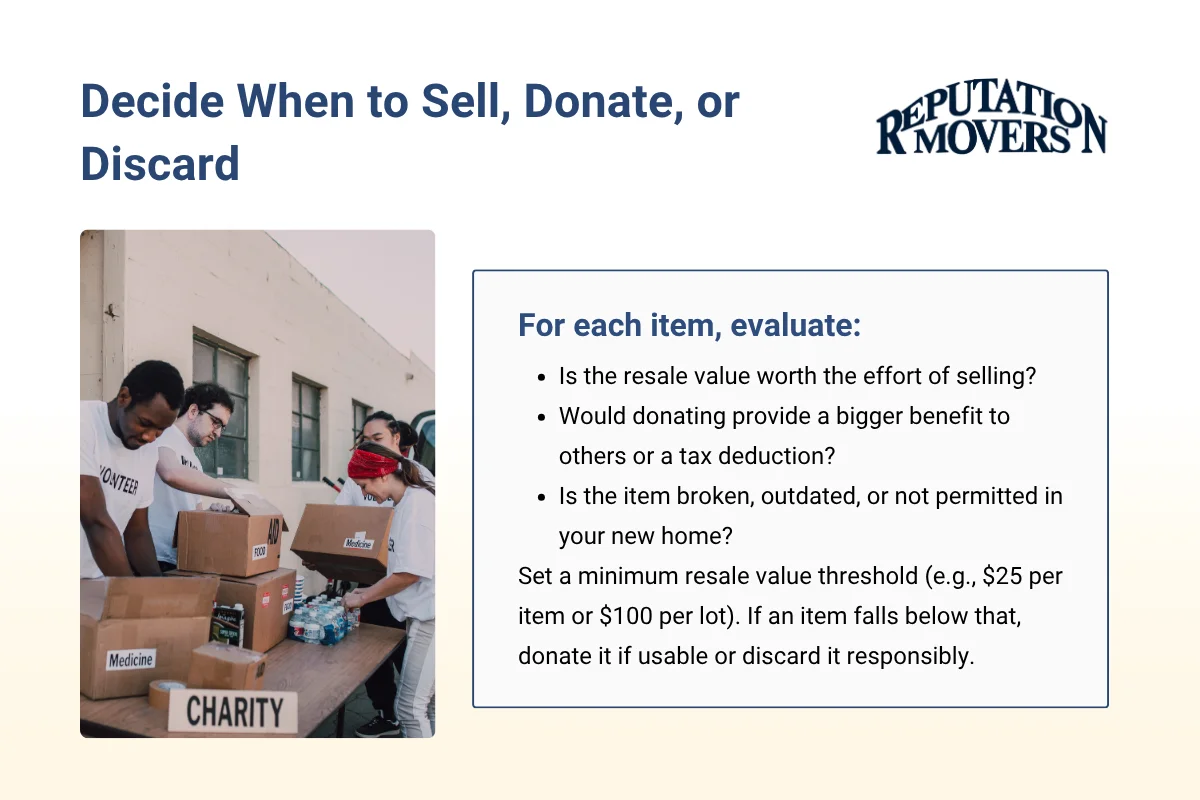
Step 8: Decide When to Sell, Donate, or Discard
For each item, evaluate:
Is the resale value worth the effort of selling?
Would donating provide a bigger benefit to others or a tax deduction?
Is the item broken, outdated, or not permitted in your new home?
Set a minimum resale value threshold (e.g., $25 per item or $100 per lot). If an item falls below that, donate it if usable or discard it responsibly.
Step 9: Handle Sentimental and Critical Items Carefully
Sentimental items can stall downsizing projects. Best practices include:
Curate a small selection of truly meaningful pieces
Digitize photos, letters, and documents to preserve memories
Pass legacy items to family or friends, sharing their stories
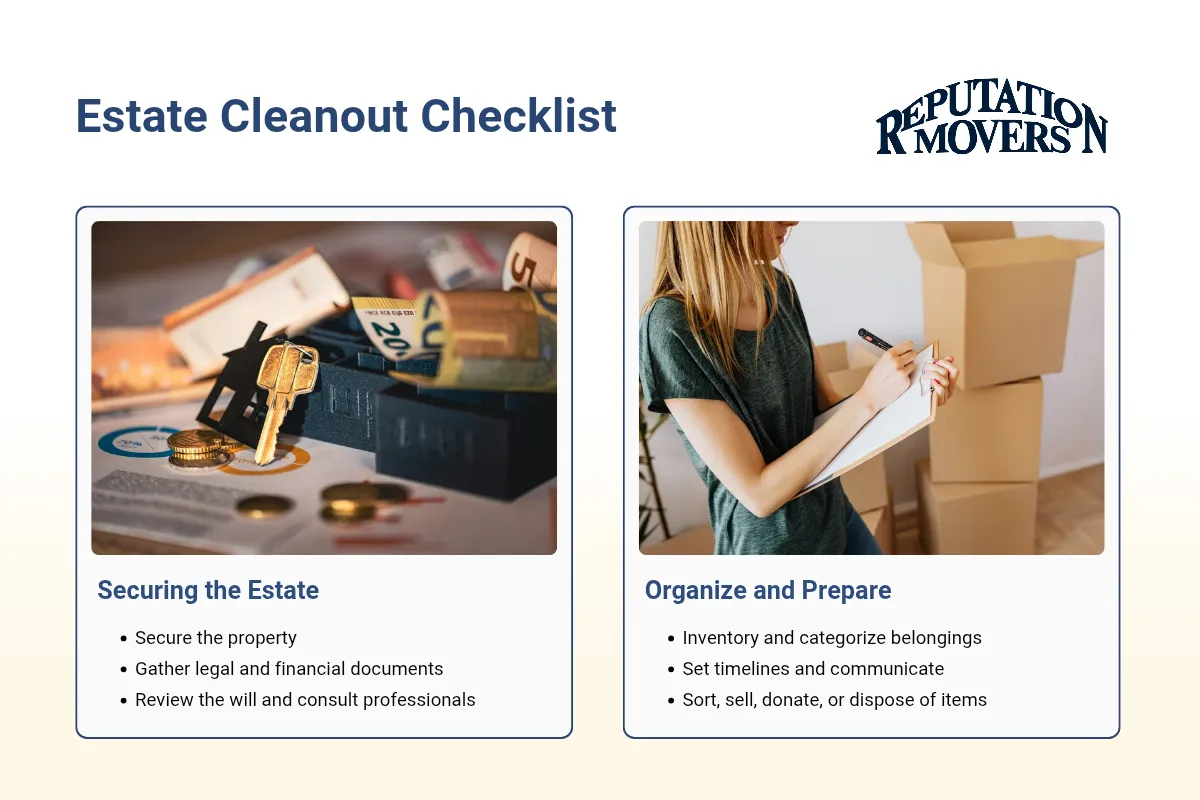
For vital documents (IDs, legal and financial records, medical files), create a “critical file” box that stays separate from the general sort. Scan what you can for backup, but always keep originals for essential records.
Step 10: Prioritize Sustainability and Responsible Disposal
Downsizing is an opportunity to reduce waste and support your community. Whenever possible:
Donate furniture, clothing, and working electronics to local charities
Recycle metals, paper, and plastics according to Alexandria’s guidelines
Use specialized services for safe disposal of hazardous materials
Rank your options for each item: reuse (yourself or family), resell, donate, recycle, and as a last resort, landfill.
Step 11: Plan for Temporary Storage When Needed
Sometimes the timeline for moving and downsizing doesn’t align perfectly. If you need extra time or space to finalize decisions, consider short- or long-term storage solutions.
Portable containers: Convenient for direct-to-home delivery
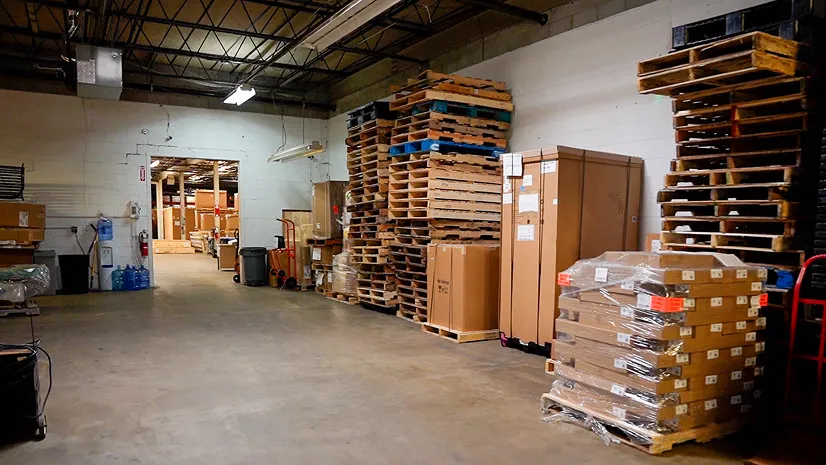
Warehouse storage: Ideal for larger items or longer-term needs
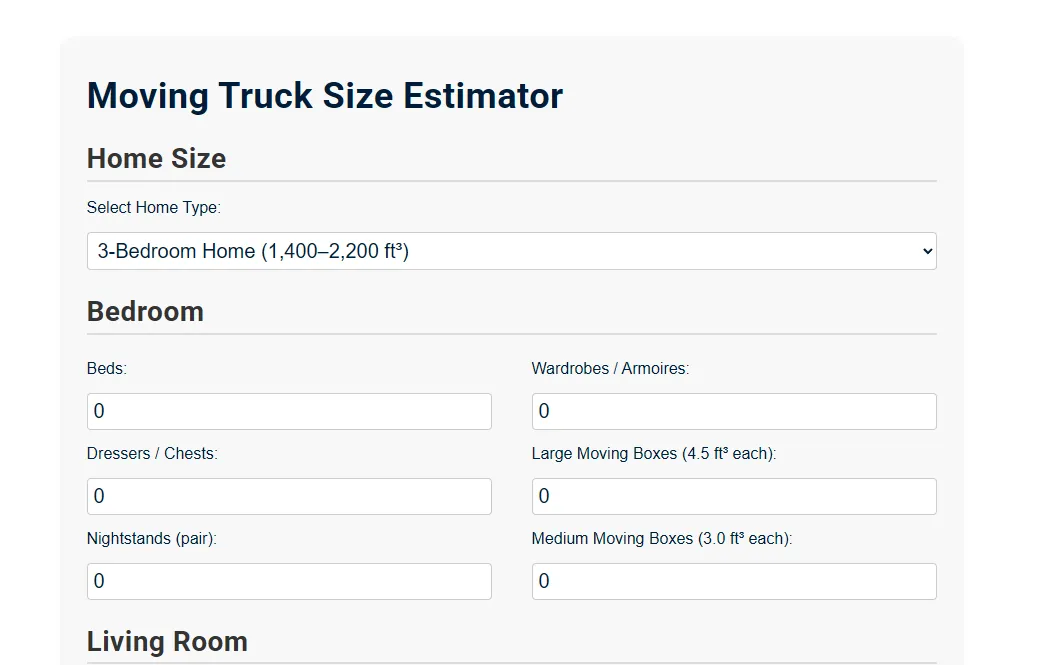
Calculate your storage needs by volume, sensitivity (climate control), and access frequency. Only store what truly fits your future plans, if it’s cheaper to replace than to store, consider selling or donating instead. Reputation Movers offers secure warehouse storage for transitions of any length, with flexible terms for Alexandria and Northern Virginia residents.
Step 12: Organize, Pack, and Label Everything Clearly
Once you’ve completed your sorting, start packing with care:
Label every box with contents and destination room
Group similar items together (e.g., kitchenware, books, linens)
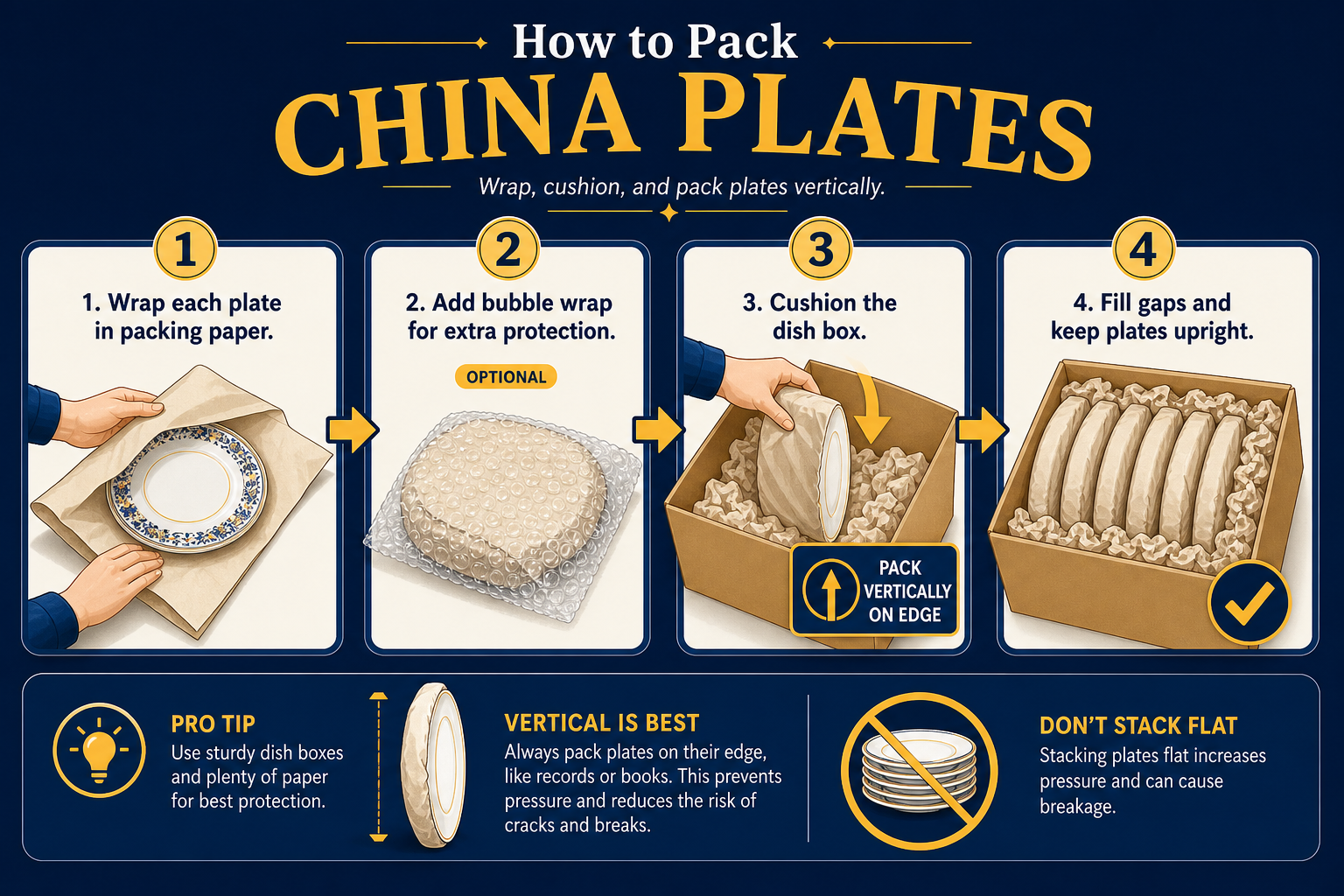
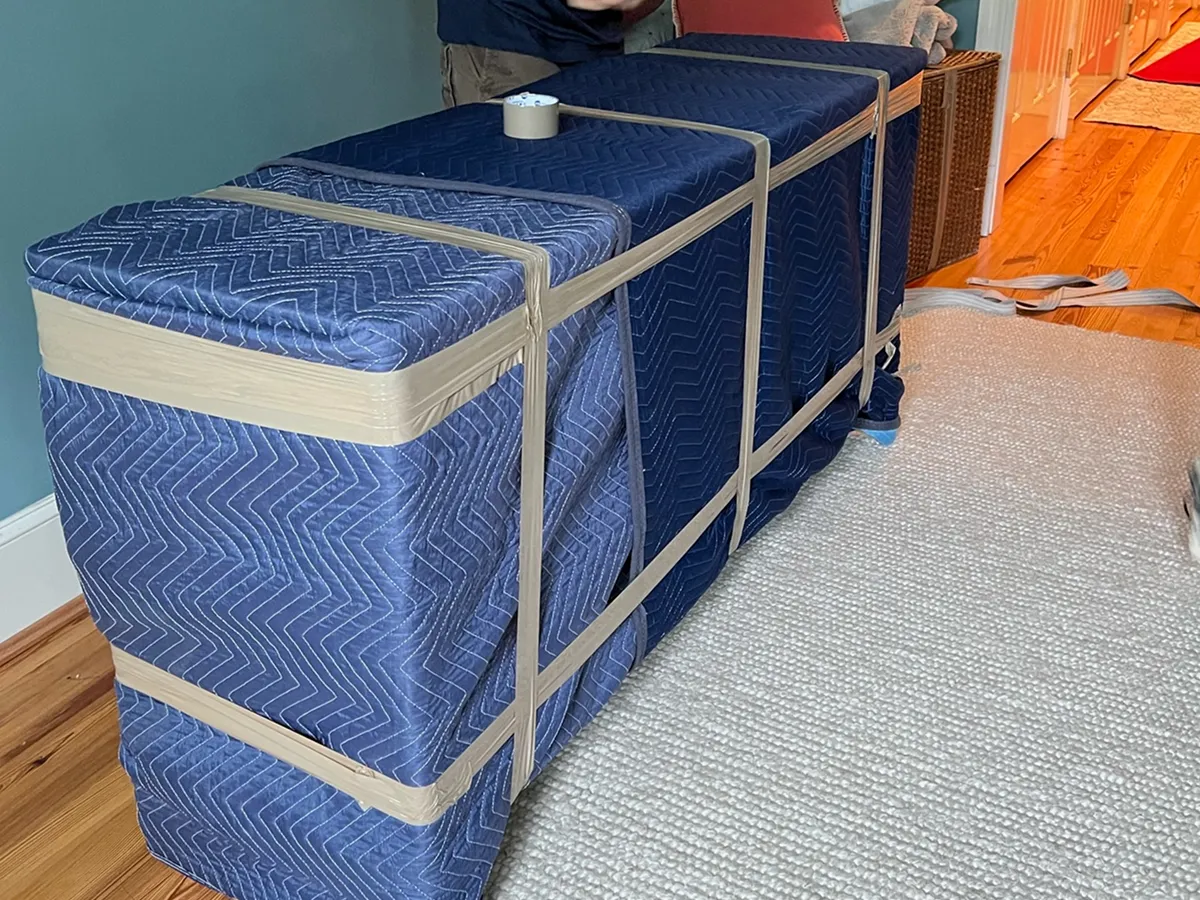
Use sturdy boxes and quality supplies to prevent damage
Keep an “essentials kit” for your first night in the new home
If you need help, Reputation Movers provides professional packing and unpacking services to save time and ensure your belongings are handled with care.
Step 13: Schedule Moving Services Early and Confirm Details
Booking your moving company is one of the final, critical steps in the downsizing home checklist. For best results:
Reserve your move date at least two months in advance
Choose off-peak times (midweek, fall/winter) for better rates and flexibility
Assign a single point of contact for coordination and updates
Confirm access details, elevators, parking, loading zones, well ahead of time
Build in buffer time for packing and loading
With Reputation Movers, your move receives dedicated attention, one move per day, managed by experienced professionals who prioritize careful handling and smooth logistics from Alexandria to your new address.
Step 14: Prepare for Move Day and Final Walkthrough
In the week leading up to your move:
Finish packing and double-check every room, including attics and basements
Set aside essentials and valuables to travel with you
Defrost and clean appliances
Arrange for final donation or trash pick-up
Do a final walkthrough to ensure nothing is left behind
Keep important documents, medications, and valuables in a designated bag, never send these with movers or in general storage.
Step 15: Unpack and Organize with Purpose
Once you arrive in your new home, resist the urge to unpack everything at once. Instead, unpack by priority, kitchen, bedroom, bathroom, then gradually organize each space using your floor plan.
Use vertical and hidden storage to maximize space
Install shelves, hooks, and closet organizers as needed
Reevaluate items as you settle in, donate or discard what no longer fits
If you need assistance, our home organizing experts can help you create efficient, customized systems for every room.
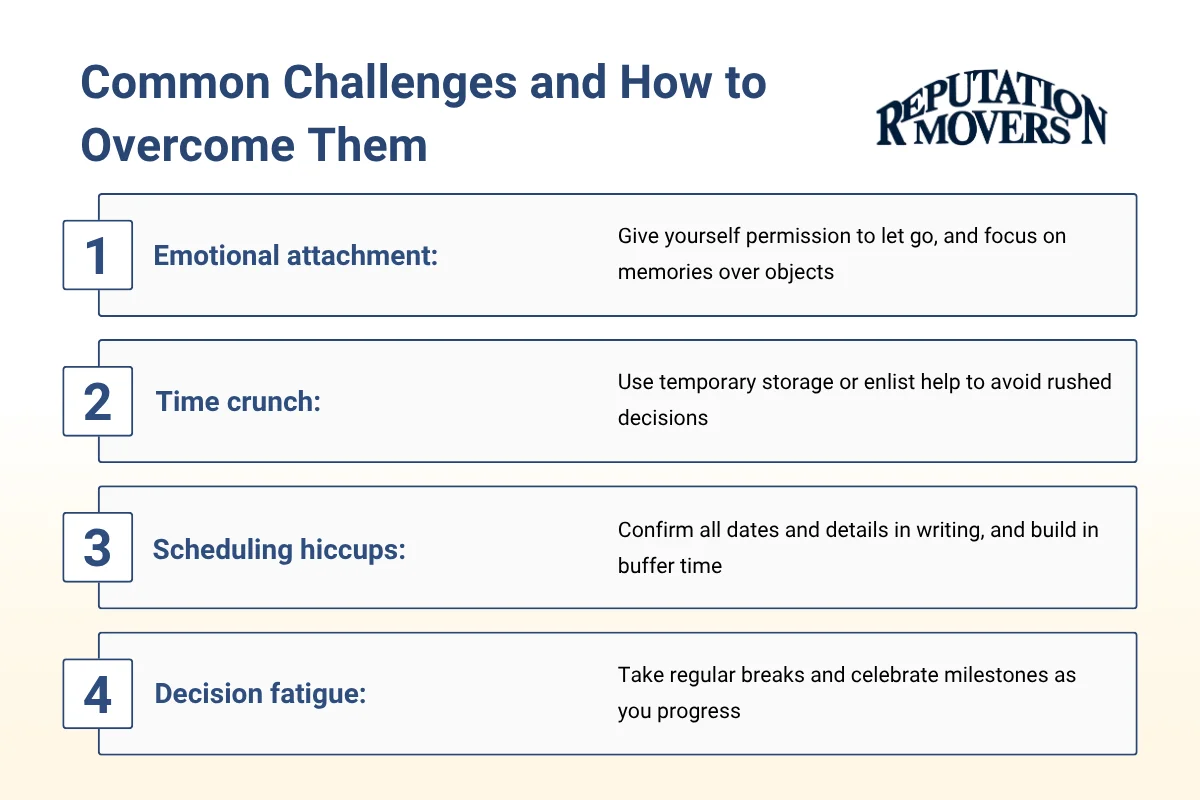
Common Challenges and How to Overcome Them
Even with the best downsizing home checklist, challenges can arise:
Emotional attachment: Give yourself permission to let go, and focus on memories over objects
Time crunch: Use temporary storage or enlist help to avoid rushed decisions
Scheduling hiccups: Confirm all dates and details in writing, and build in buffer time
Decision fatigue: Take regular breaks and celebrate milestones as you progress
Remember, downsizing is a process, not a single event. Stay patient and flexible, and seek support from family, friends, or professionals when needed.

Checklist Summary: Your Downsizing Roadmap
Set clear goals and timeline
Create a room-by-room inventory
Sort items using the five-category model
Apply decision rules and new space limits
Sequence rooms from easiest to hardest
Time-box decisions and avoid overthinking
Sell, donate, or discard responsibly
Handle sentimental and critical items with care
Plan for temporary storage as needed
Packing, labeling, and organizing for move day
Book moving services and confirm logistics early
Prepare for move day and final walkthrough
Unpack, organize, and settle in by priority
Ready to Downsize? Let Reputation Movers Make It Easy
Whether you’re moving within Alexandria, Arlington, Fairfax, or elsewhere in Northern Virginia, a well-planned downsizing home checklist is your best tool for a smooth, stress-free move. At Reputation Movers, we’re here to guide you every step of the way, from sorting and storage to packing, moving, and organizing your new home.
Let’s make your next move your best move. Get a quote today or call us at (703) 660-6683 to start your personalized downsizing journey.


















.webp)


.webp)
.webp)
.webp)

.webp)
.webp)











.webp)

.webp)


.png)