.webp)
.svg)
Moving a refrigerator isn’t just about muscle. It’s a careful process that, when done right, protects your appliance, your home, and your sanity. Whether you’re upgrading your kitchen or relocating across town, knowing how to move a refrigerator safely is essential for a smooth transition. At Reputation Movers, we help Alexandria and Northern Virginia homeowners move bulky appliances every day, so we know all the tricks and pitfalls.
In this detailed guide, we’ll walk you through every step: from advance prep and defrosting to choosing the right equipment and ensuring your fridge runs perfectly in its new home. Let’s dive into the methodical process of moving a refrigerator without the headaches.
Why Proper Refrigerator Moving Matters
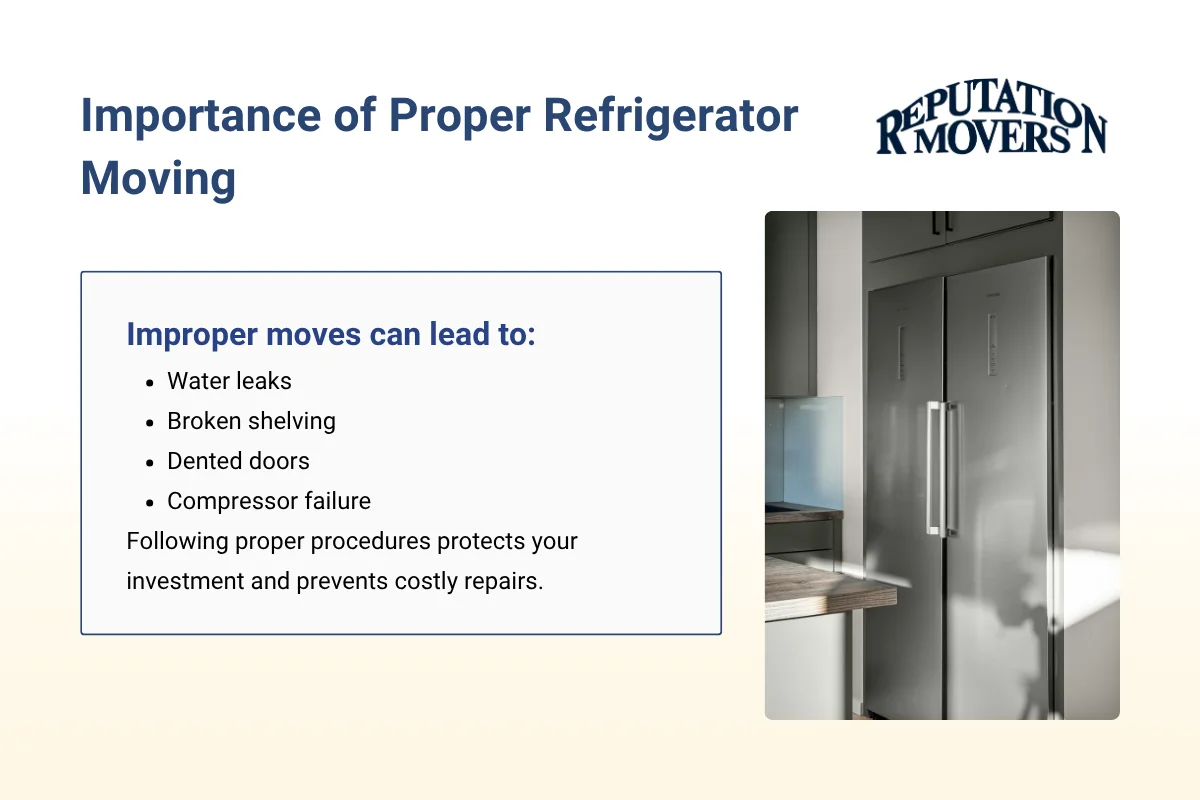
Refrigerators are heavy, intricate machines. A careless move can lead to water leaks, broken shelving, dented doors, or even compressor failure. Worse, improper handling can void warranties or result in costly repairs. Knowing how to move a refrigerator the right way saves you from unnecessary stress, expensive mistakes, and food spoilage.
By following proper procedures, you not only safeguard your investment but also ensure the refrigerator works efficiently in your new location. Let’s explore the crucial steps involved.
Securing Shelves and Drawers: Protecting Internal Components
Shelves, bins, and drawers can become dangerous projectiles if not properly secured during a move. Protect both the fridge and its internal components by following these steps:
Remove all shelves, crispers, and bins if possible; wrap each in bubble wrap or moving pads and pack into a sturdy box.
If removing isn’t feasible, immobilize shelves and drawers with padding and secure them using tape or straps to eliminate movement.
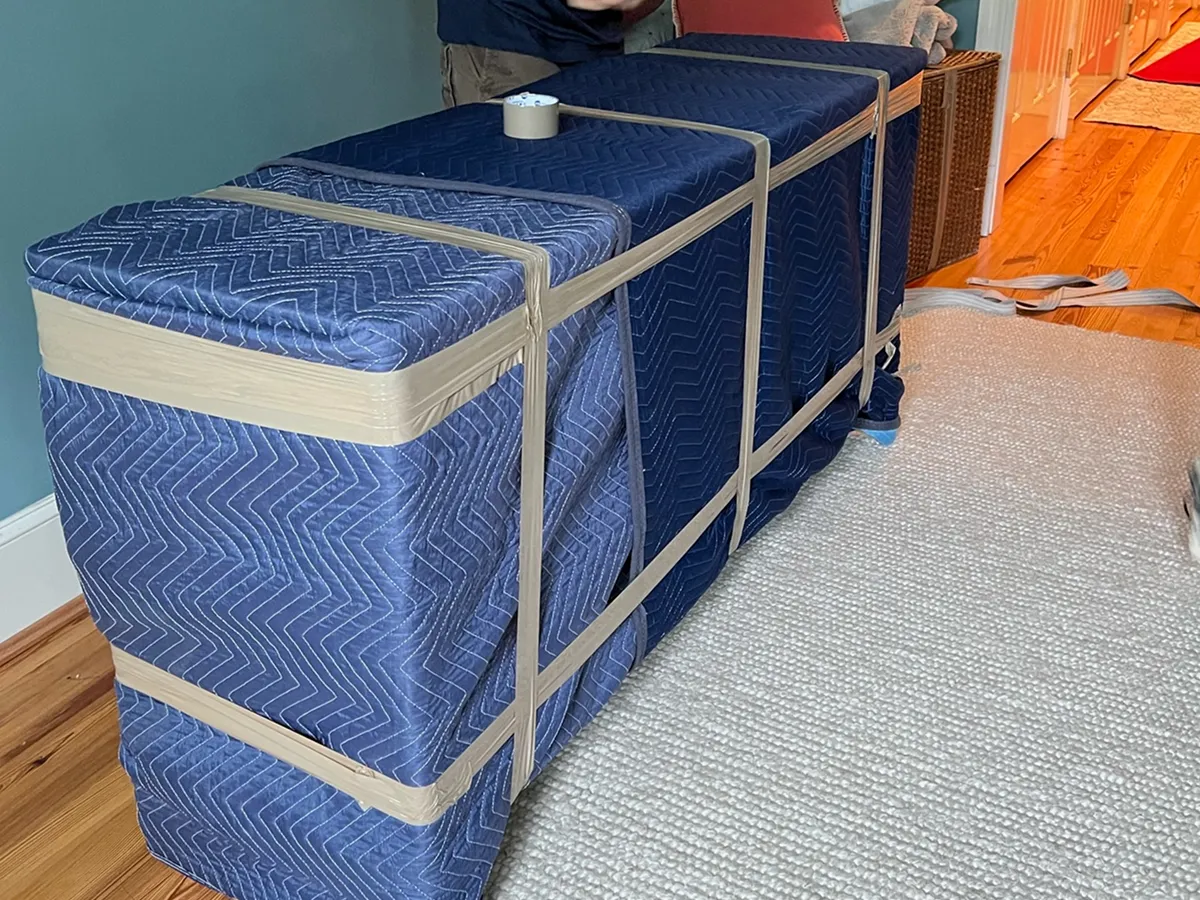
Externally secure refrigerator doors with stretch wrap, moving straps, or stretch tape to prevent them from swinging open.
Wrap the entire fridge with moving blankets for added protection against scratches and bumps.
Properly securing these internal and external parts prevents costly damage and makes the move far smoother.
Moving Upright vs. On Its Side: What You Need to Know
The orientation of your refrigerator during transport matters. Always move a refrigerator upright whenever possible. This protects the compressor and helps keep refrigerant and oil where they belong.
If your fridge must be transported on its side due to space constraints, follow these precautions:
1. Choose the side recommended by the manufacturer, based on tubing layout, to minimize oil migration.
2. Once relocated, let the refrigerator stand upright for a period equal to or longer than the time it was on its side (up to 24 hours) before plugging it in.
Never transport a fridge on its back. The weight can damage internal components and lead to permanent failure.
Transport Safety Measures: Protecting Your Appliance and Yourself
Safe transport is about more than just lifting. You need to control shocks, prevent tilting, and use reliable equipment for moving a refrigerator.
Turn off, unplug, and defrost the refrigerator before moving.
Disconnect any water or ice lines to avoid leaks.
Use an appliance dolly with straps to keep the fridge upright and stable.
Always move with at least two people to coordinate lifting and maneuvering, especially on stairs or ramps.
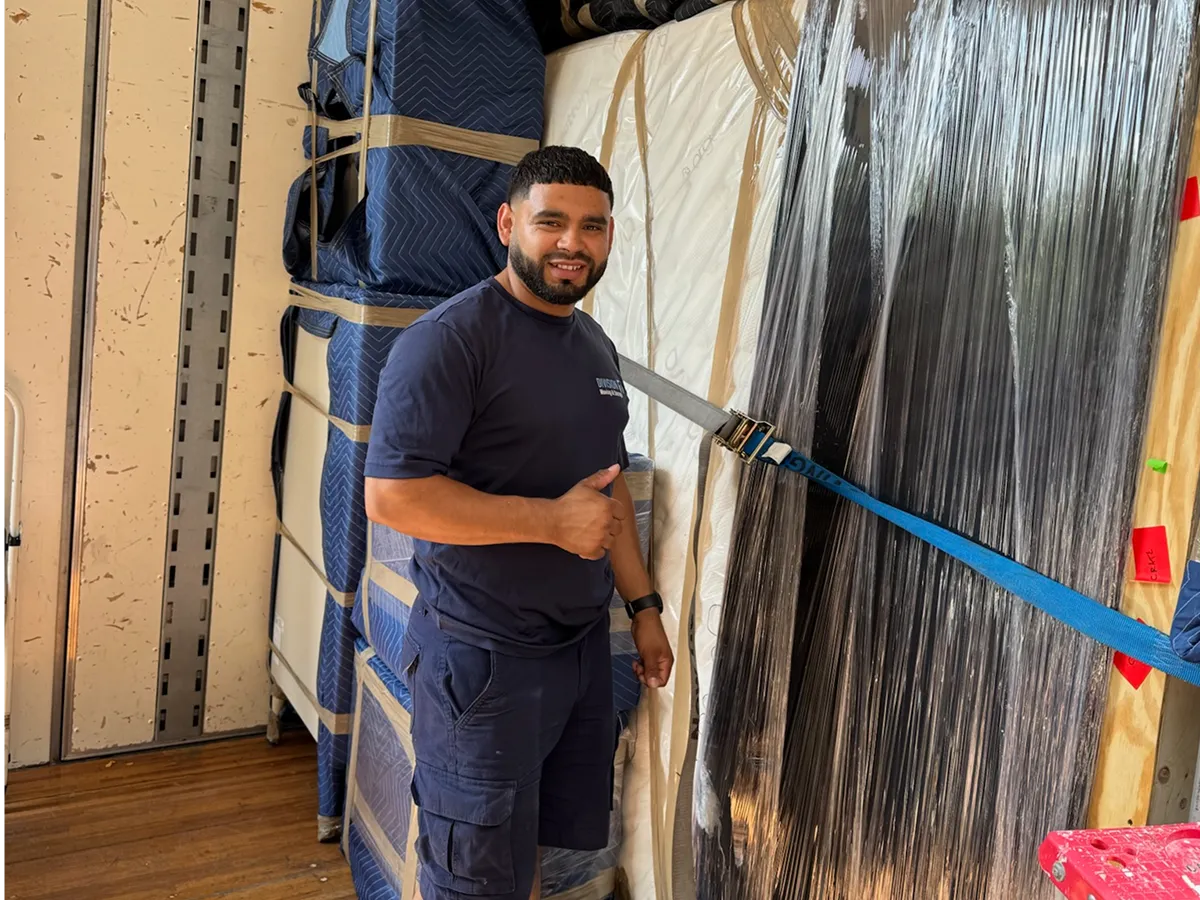
Secure the refrigerator inside the moving truck with straps to prevent shifting during transport.
These steps reduce the risk of injury, damage to the appliance, and harm to your property.
Waiting Period Before Replugging: Don’t Rush the Restart
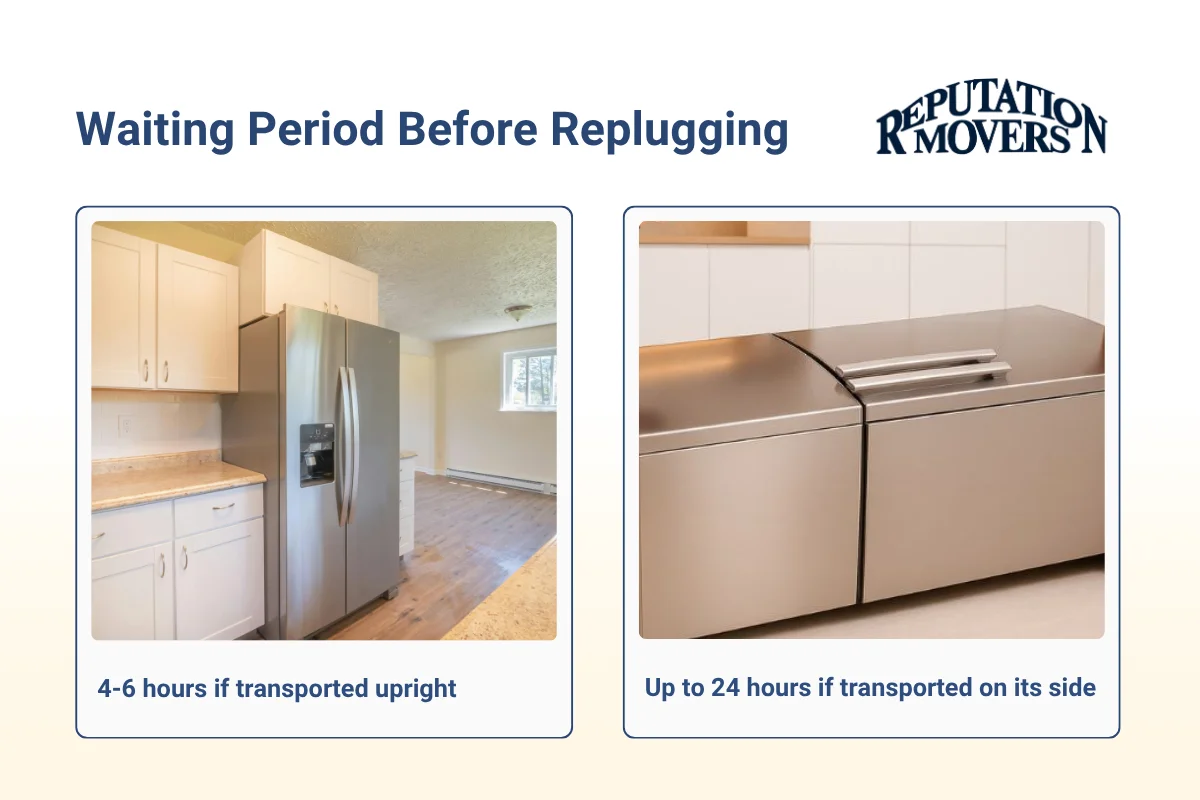
After the move, patience pays off. If you’ve transported your refrigerator upright, allow it to sit for at least 4, 6 hours before plugging it in. If it was on its side, extend this waiting period to match the time it spent sideways, up to 24 hours.
This pause lets compressor oil and refrigerant settle back into proper position, preventing startup damage. Plugging in too soon can lead to costly repairs or a shortened appliance lifespan.
Choosing the Right Moving Equipment
Using proper equipment is essential for moving a refrigerator safely, especially for tall or heavy models found in many Alexandria and Fairfax homes. The right tools make the process smoother and protect both you and your appliance.
Opt for an appliance dolly with a tall frame, large wheels, and integrated ratchet straps.
Use four-wheel furniture dollies for flat, open areas; secure the fridge with straps to prevent sliding.
Shoulder harnesses can help in tight doorways, but require experience and teamwork.
Always empty the refrigerator, defrost in advance, and secure all doors before loading.
If you’re unsure about equipment or handling, consider professional help from a trusted moving company.
Preparing the New Location: Set Up for Success
Before moving your refrigerator in, make sure its new home is ready. This prevents last-minute surprises and ensures optimal performance right from the start.
Measure the space, allowing extra room for doors, handles, and rear plug clearance.
Leave at least 1, 2 inches on sides and top for ventilation, and sufficient space at the back for airflow and connections.
Avoid placing the fridge near heat sources or direct sunlight, which can strain the compressor.
Use a carpenter’s level to ensure the appliance sits flat, adjust leveling feet as needed for proper door sealing.
Connect to a dedicated, grounded outlet. If your fridge has a water line, plan its path for minimal bends and secure it with clamps.
These simple steps help your refrigerator run efficiently and extend its lifespan in your new residence.
Common Mistakes to Avoid When Moving a Refrigerator
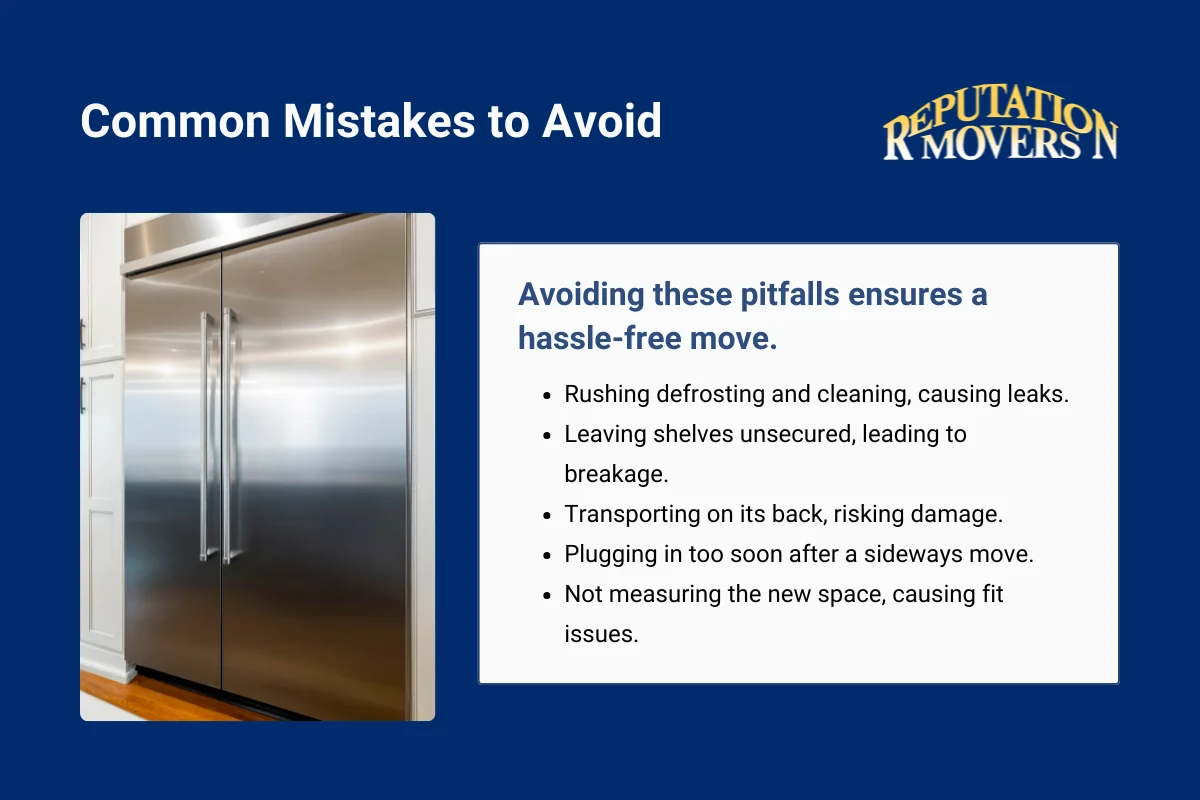
Even well-intentioned movers can make expensive errors. Watch out for these common pitfalls:
1. Rushing the defrost and cleaning process, leading to leaks or odors.
2. Leaving shelves or drawers unsecured, resulting in breakage.
3. Transporting the fridge on its back instead of upright or on its side (if unavoidable).
4. Plugging in the refrigerator immediately after a sideways move, risking compressor damage.
5. Skipping measurements and finding the appliance doesn’t fit in its new spot.
Take your time and follow each step for a hassle-free move.

When to Call the Professionals
Moving a refrigerator is not a solo job. If you’re dealing with narrow stairs, long carries, or have concerns about damaging floors or walls, hiring experienced movers is your best bet. At Reputation Movers, we treat every appliance, and every home, with care, offering local moving expertise for Alexandria, Arlington, Fairfax, and the entire Northern Virginia region.
We bring the right equipment, proven techniques, and a customer-first attitude to every move, so you can focus on settling into your new home.
Your Refrigerator Move Checklist
Defrost 24, 48 hours in advance
Deep clean and dry all surfaces and components
Remove or secure all shelves, bins, and drawers
Disconnect water and ice lines
Protect doors and exterior with wrap and moving blankets
Use an appliance dolly and team lift for safety
Secure the fridge upright in the moving vehicle
Allow for proper settling time before plugging in at the new location
Ensure proper spacing, leveling, and utility hookups in the new home
Following this checklist helps guarantee a successful move for your refrigerator and peace of mind for you.
Ready for a Smooth Move?
Moving a refrigerator doesn’t have to be risky or stressful. With the right preparation, equipment, and expert help, you can move your appliance safely and get back to enjoying your new space. Reputation Movers is proud to serve Alexandria and the greater Northern Virginia area with dependable, professional moving services, whether you need help with appliances, household goods, or specialty items.
If you’re planning a move and want a truly seamless experience, get a quote today or call us at (703) 660-6683. Let’s make your next move your best move yet.
























.webp)

.webp)
.webp)
.webp)

.webp)
.webp)












.webp)
.webp)


.png)